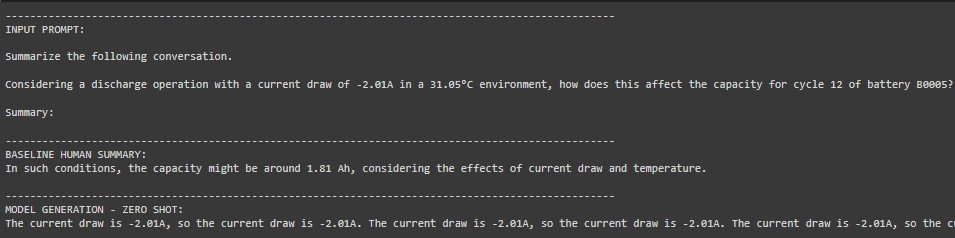
Battery conversations
Battery cycles, current, temperature, voltage, and capacity are transformed into prompt-response examples grounded in digital-twin data.
Human-centered battery twins
Can a battery digital twin explain its condition in language a user can act on?
Published in the 2025 IEEE ICUFN proceedings
How can a parameter-efficient language model make battery digital-twin insights more interactive and understandable?
Battery twins produce technical measurements and predictions, but their value depends on whether engineers and asset owners can interpret them. BAT-GPT explores a conversational layer that translates battery operating data into direct, domain-specific responses.
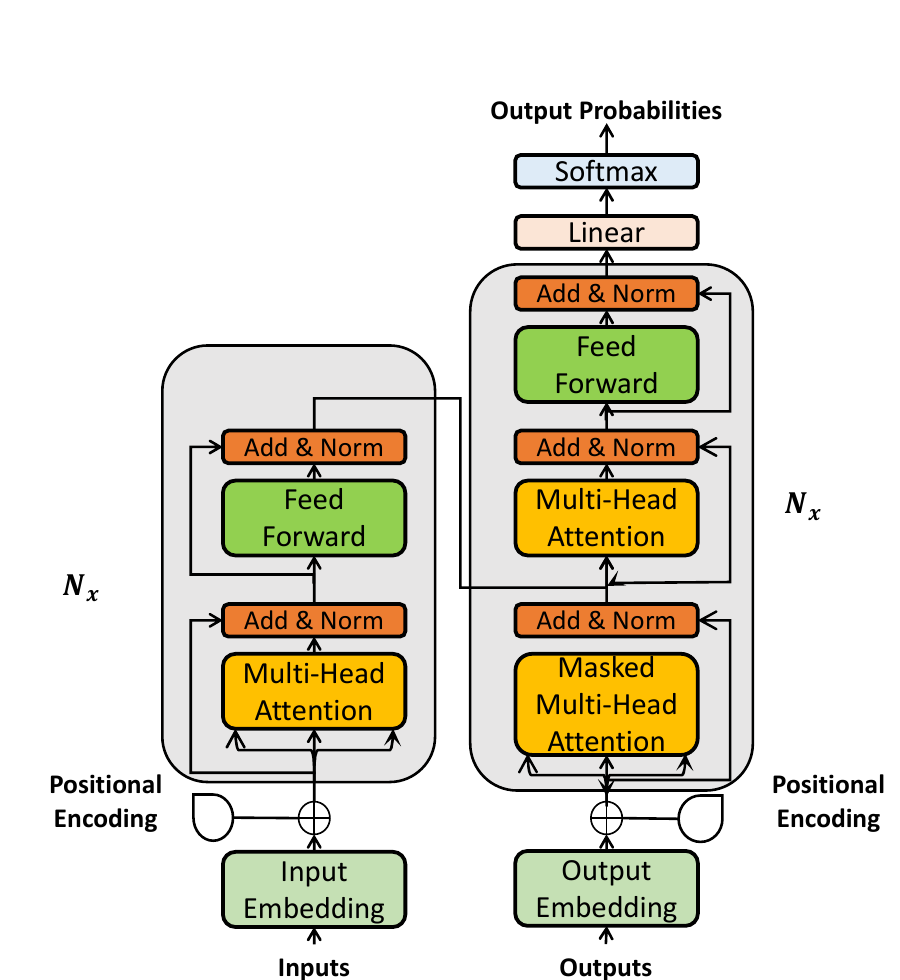
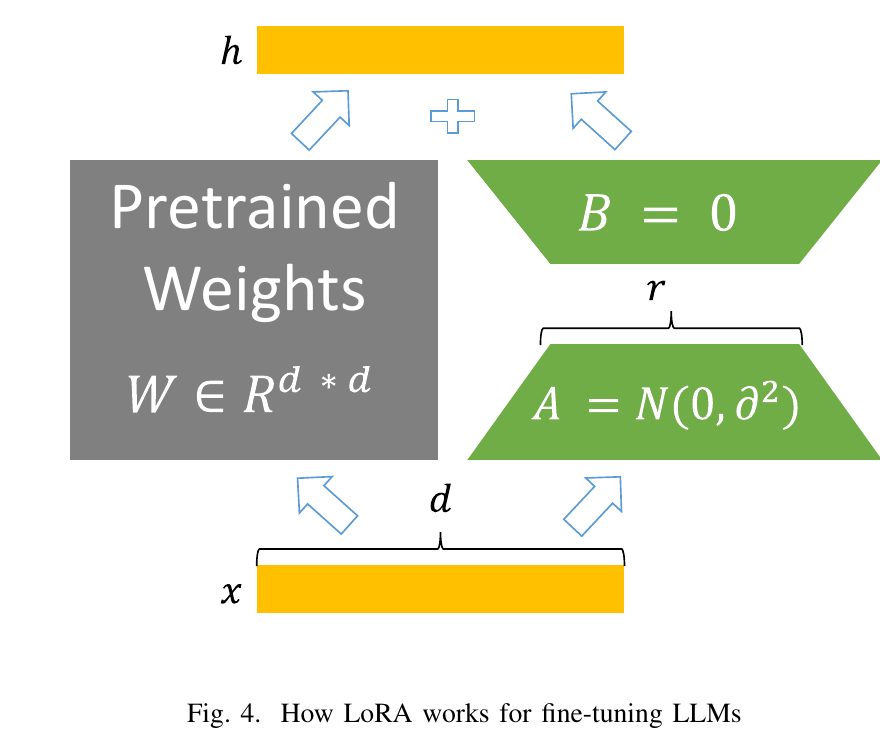
The project fine-tunes FLAN-T5 with Low-Rank Adaptation using battery conversations derived from NASA data. Zero-shot, few-shot, and parameter-efficient fine-tuning experiments reveal both the promise and the current limitations of language models as digital-twin assistants.
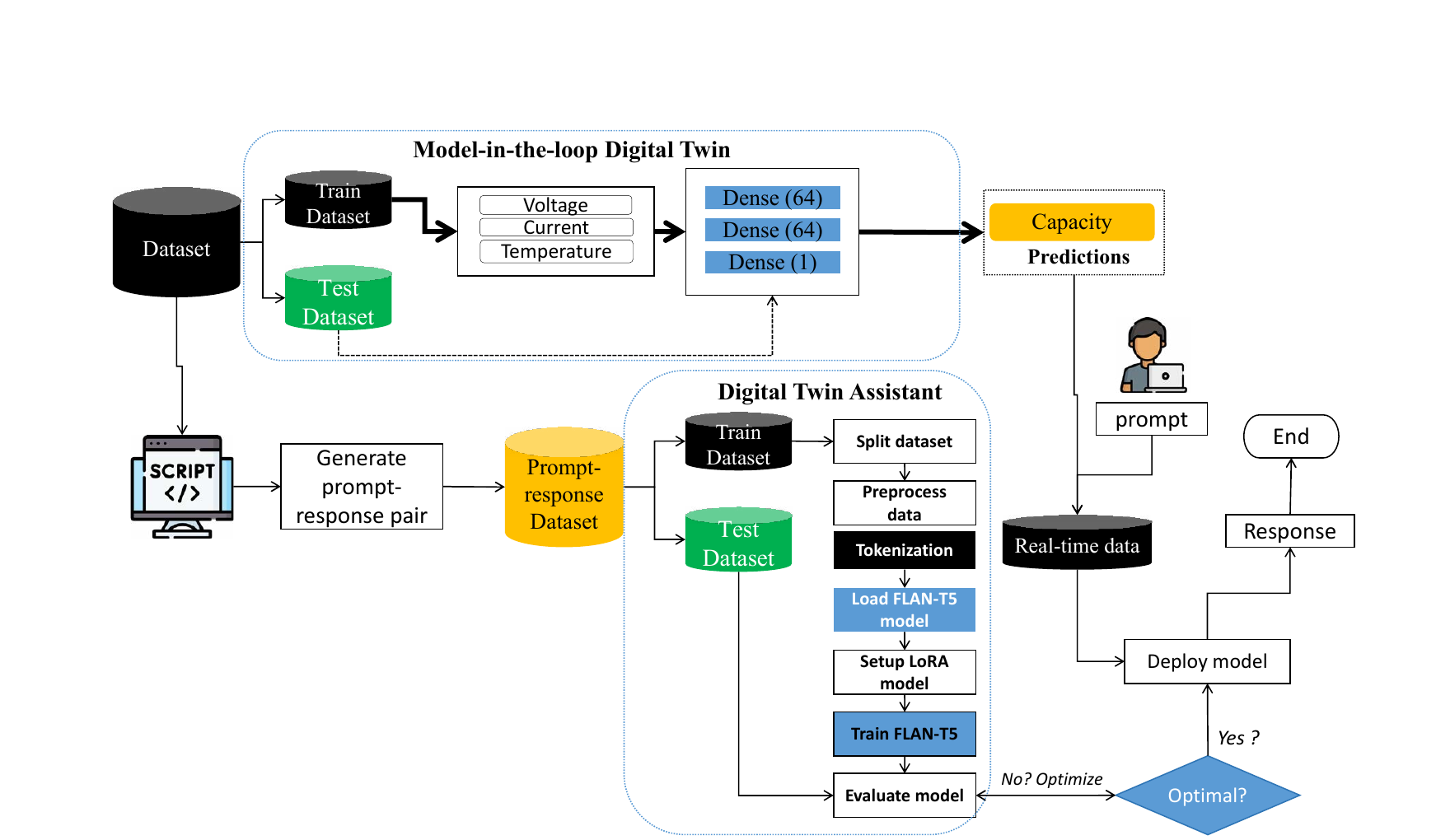
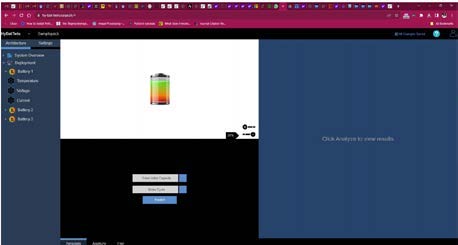
The complete BAT-GPT architecture links a capacity-predicting model-in-the-loop digital twin to prompt-response generation, FLAN-T5 adaptation, real-time battery data, and an interactive response loop.
Battery cycles, current, temperature, voltage, and capacity are transformed into prompt-response examples grounded in digital-twin data.
FLAN-T5 is adapted to the battery domain through low-rank parameter updates rather than full-model retraining.
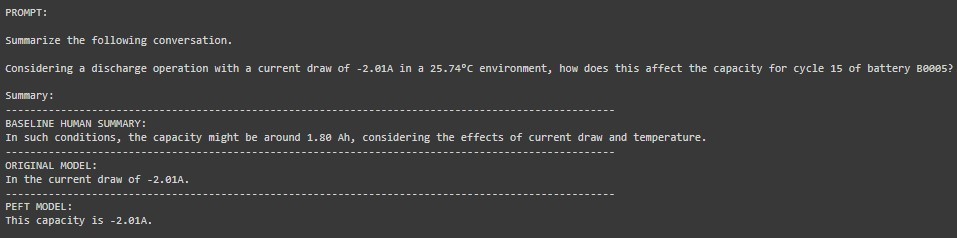
Base, zero-shot, few-shot, and fine-tuned responses are compared using human baselines and ROUGE metrics.
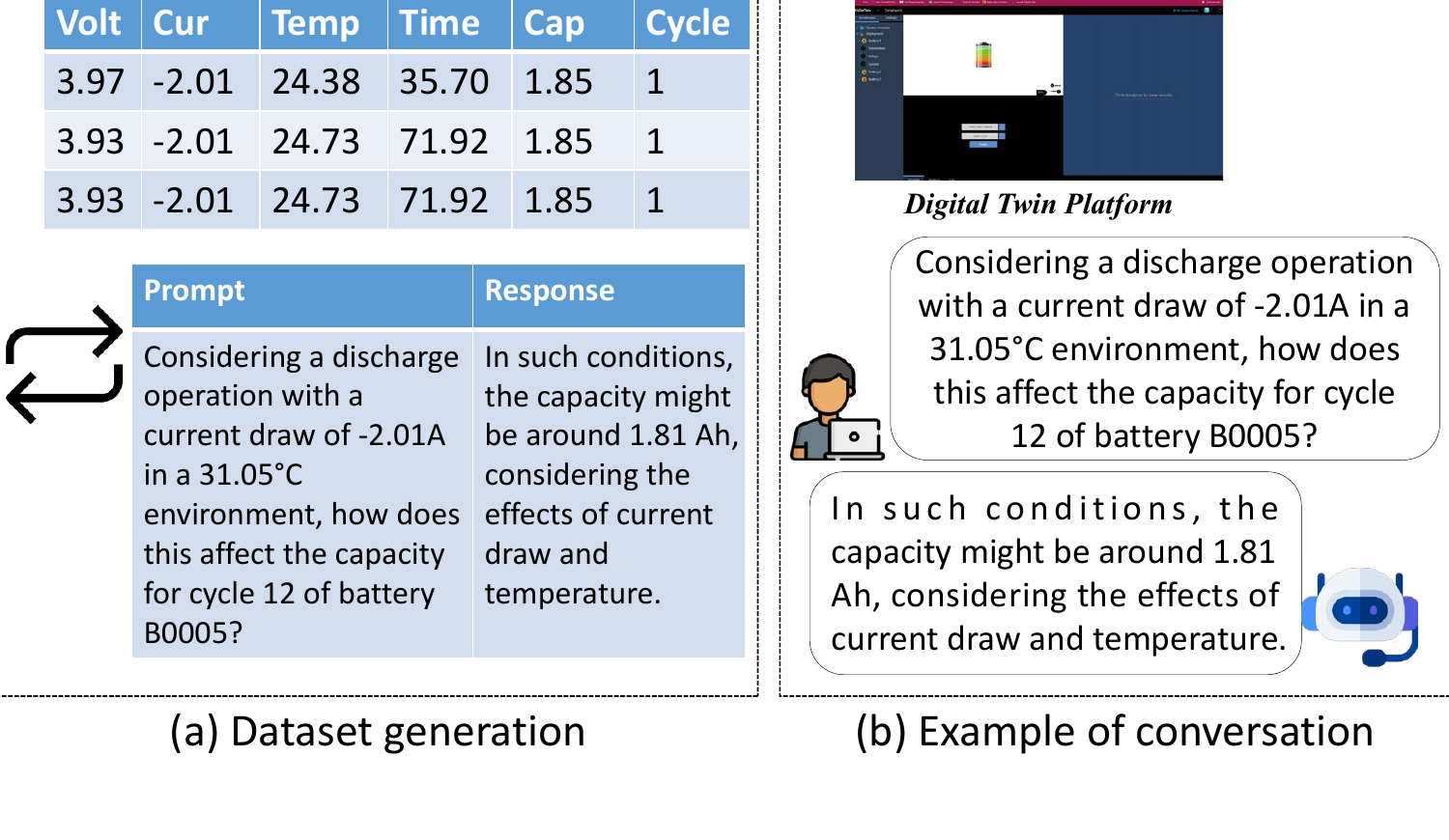
BAT-GPT is valuable because it tests the interface between numerical prediction and human understanding. The evaluation does not hide failure: some responses become clearer after adaptation while capacity estimates can remain inaccurate. That evidence defines where grounding and validation must improve.
This study is an early language-interface prototype built around NASA battery data and FLAN-T5. It establishes the conversational component later integrated into the broader BatteryMetrix vision.