Physics-informed prediction
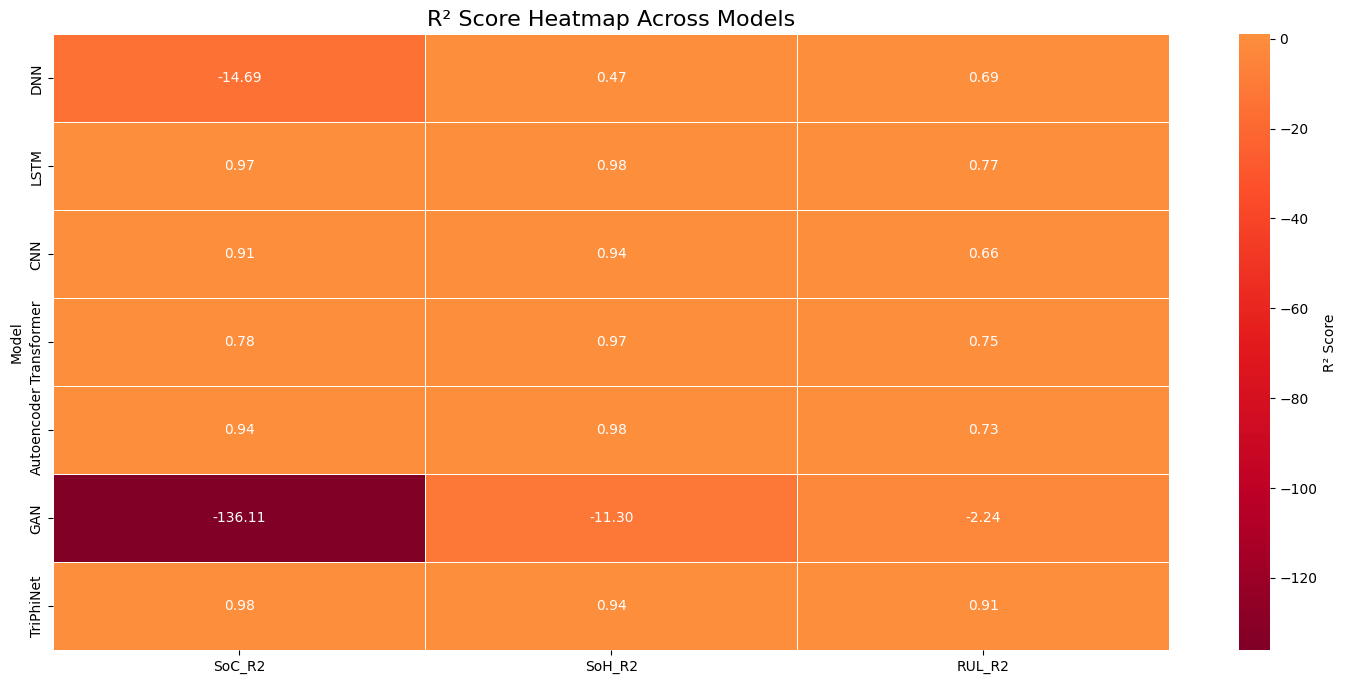
TriPhiNet combines three physics-informed learning paths, positional encoding, residual connections, and electrochemical constraints for robust multi-state estimation.
Predictive energy systems
What would a battery digital twin look like if prediction, explanation, security, and human use were designed together?
BatteryMetrix paper and public repository will be released soon
How can a battery digital twin remain accurate under changing operating conditions while explaining its predictions and protecting lifecycle records?
BatteryMetrix was the crux of my PhD research. It treats a battery twin as more than a forecasting model. The framework connects electrochemical and thermal knowledge, physics-informed learning, state estimation, explanation, secure ownership, and immersive interaction.
The system estimates State of Charge, State of Health, and Remaining Useful Life, then translates those predictions into evidence a user can inspect through SHAP, LIME, surrogate models, and the BAT-GPT conversational assistant.
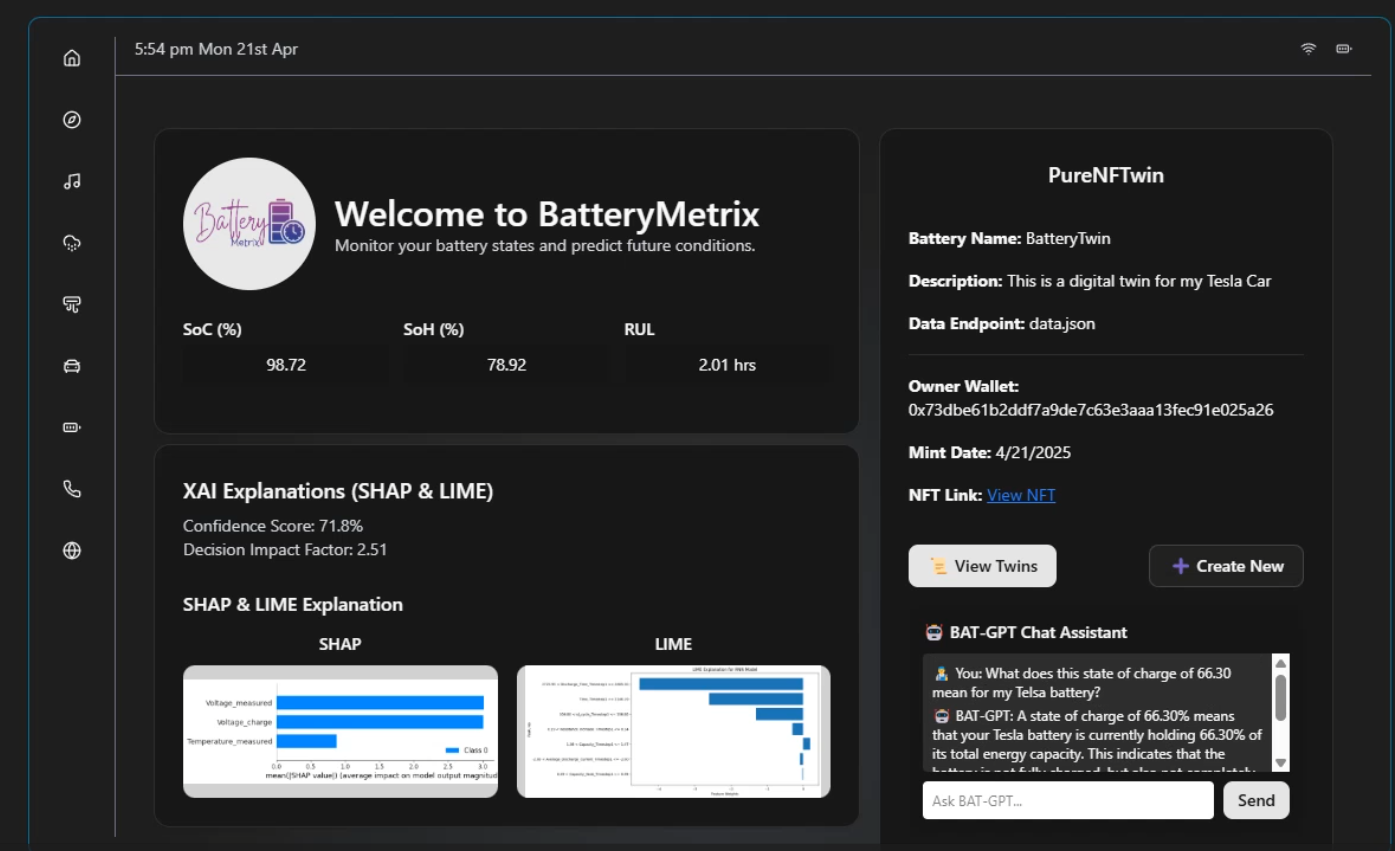
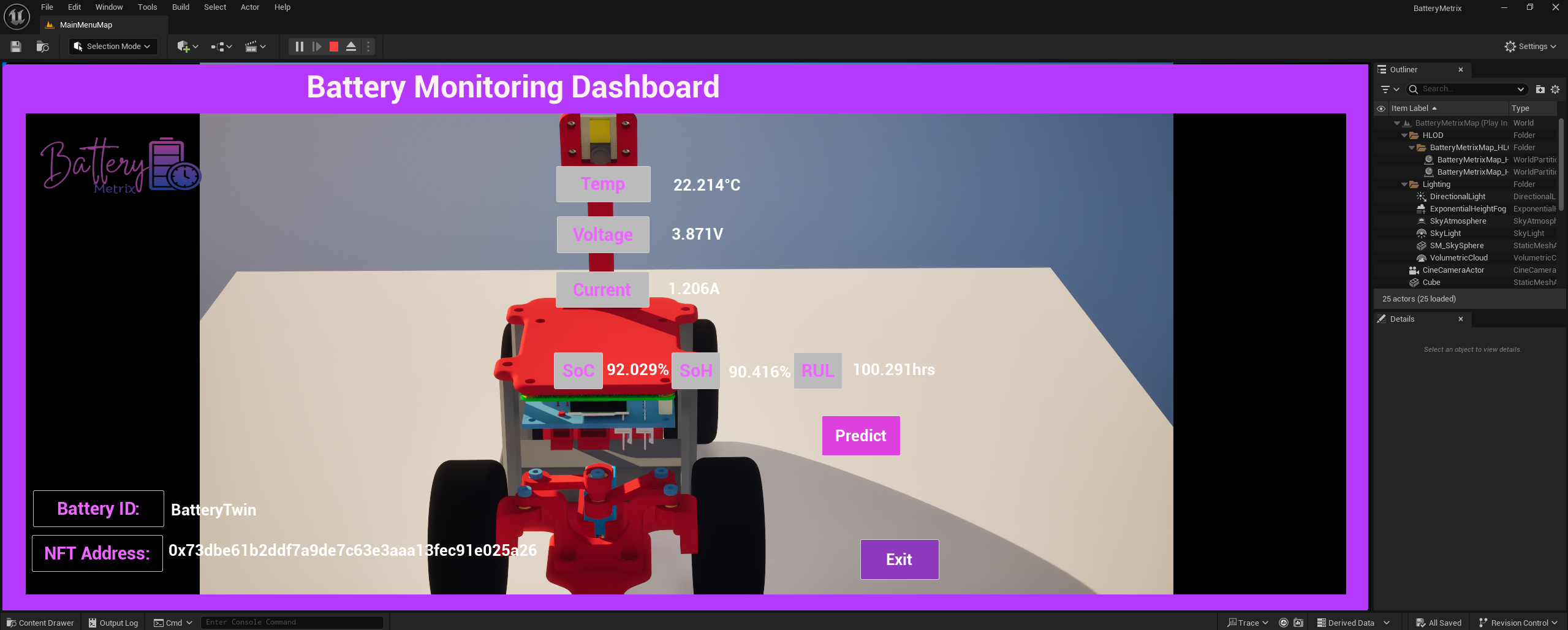
The monitoring interface combines State of Charge, State of Health, Remaining Useful Life, SHAP and LIME evidence, asset ownership, and BAT-GPT assistance.
TriPhiNet combines three physics-informed learning paths, positional encoding, residual connections, and electrochemical constraints for robust multi-state estimation.
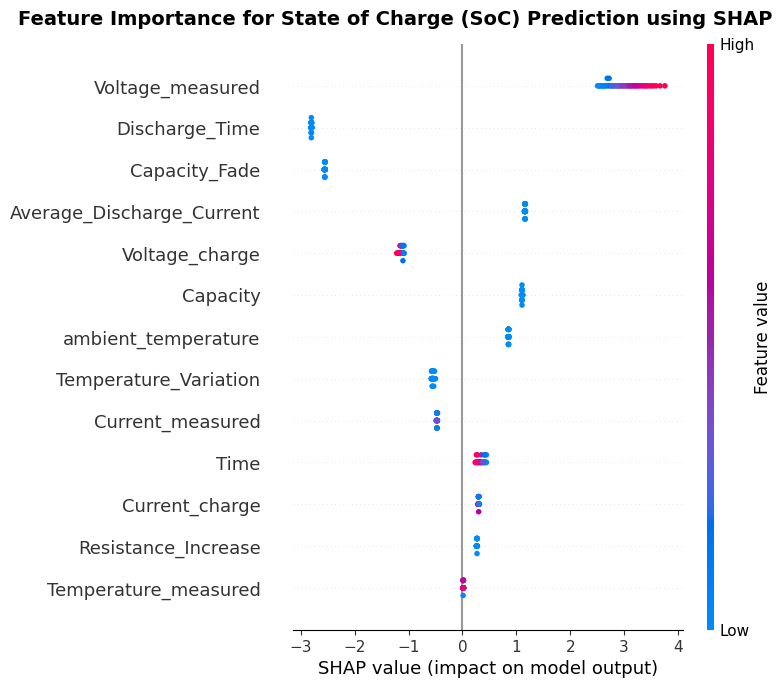
SHAP, LIME, and surrogate models expose the measurements and operating conditions influencing State of Charge and State of Health predictions.
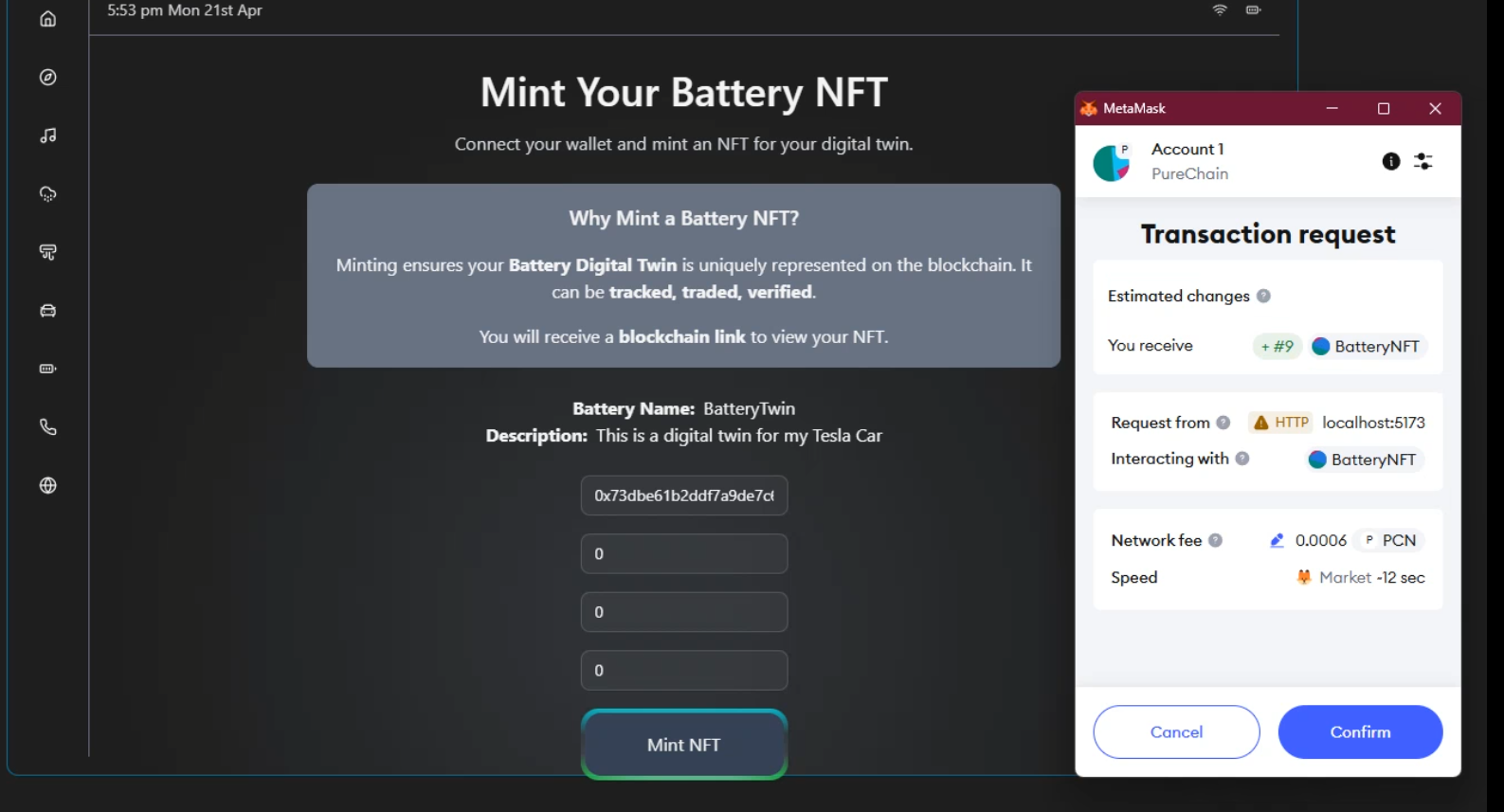
The web and Unreal Engine interfaces connect predictive monitoring with NFT-based ownership, blockchain lifecycle records, and BAT-GPT explanations.
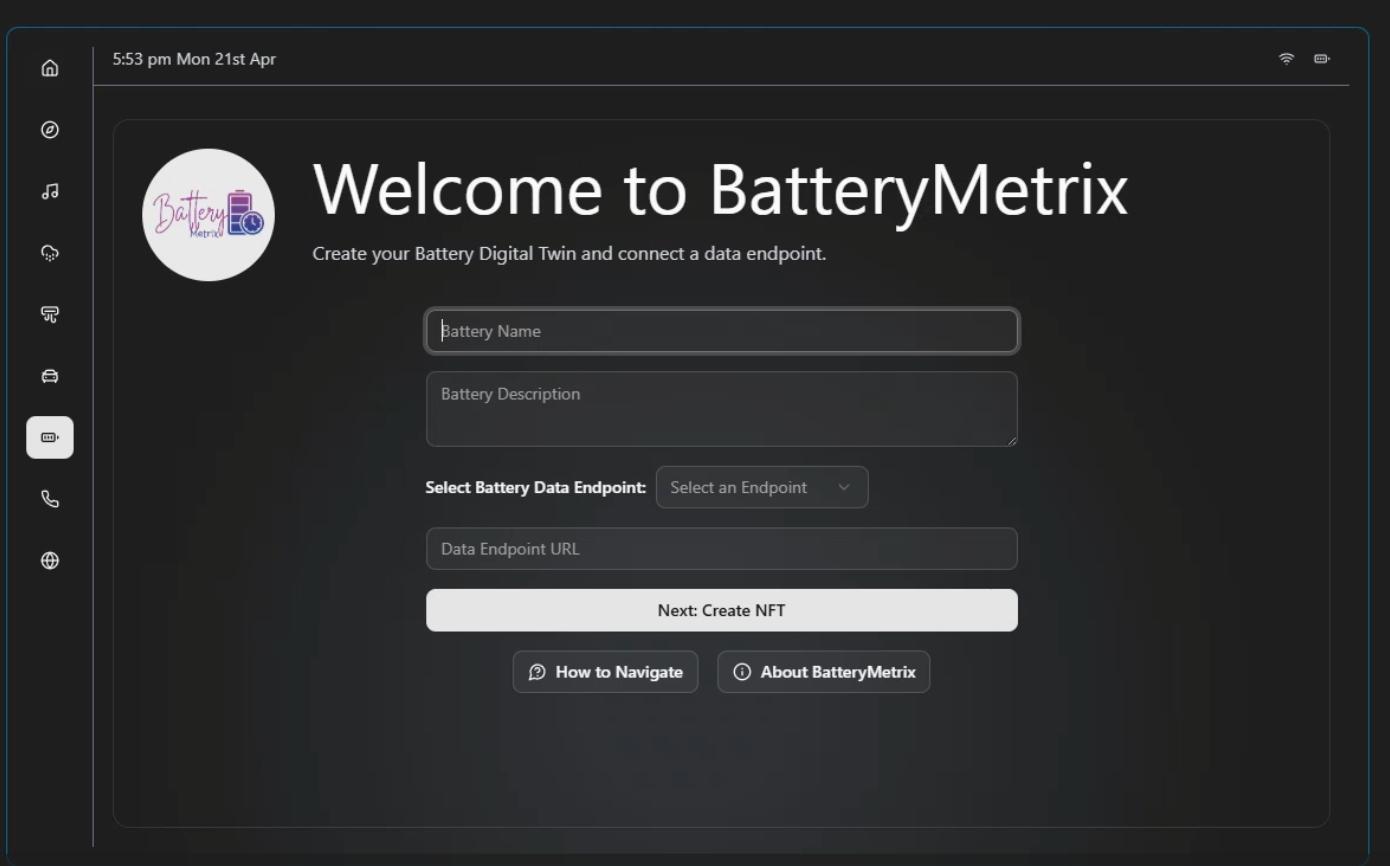
BatteryMetrix grew from a gap I repeatedly encountered during the PhD: accurate state estimates alone do not create a trustworthy battery-management system. Engineers and asset owners also need to understand why a prediction changed, trace the data and lifecycle record behind it, and move between numerical diagnostics and an intuitive representation of the battery twin.
The dissertation establishes the integrated framework and validates its predictive and interaction components. A dedicated BatteryMetrix paper and public repository are in preparation and will be linked here when released.