PureEdge processing
Edge services support low-latency monitoring and continued operation in settings where cloud connectivity may be constrained.
Resilient infrastructure
How can engineers inspect bridge conditions in real time when connectivity, security, and spatial context all matter?
Presented at ICUFN 2025, July 8 to 11 at Iscte, University Institute of Lisbon, Portugal
How can a bridge twin maintain low-latency monitoring, auditable data, and consistent sensor placement across web and immersive interfaces?
BridgeSync is a digital twin framework for secure and resilient bridge monitoring. It connects structural sensors, edge processing, synchronized 3D representations, and a blockchain-ready data layer.
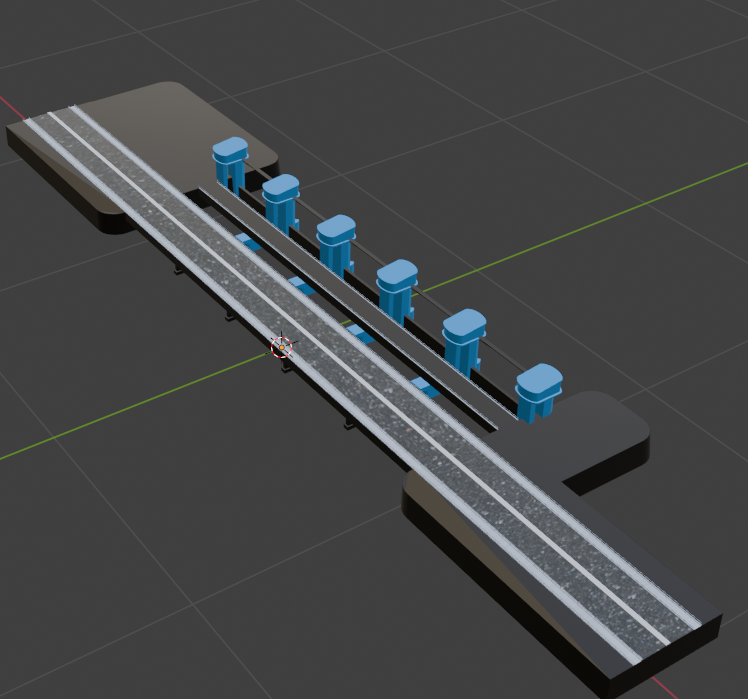
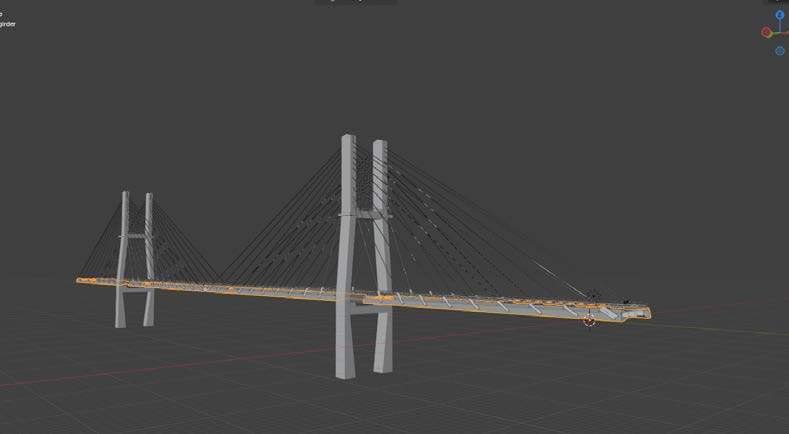
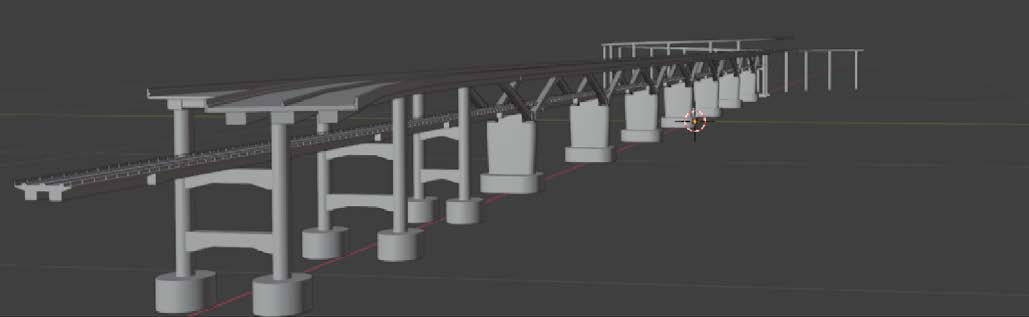
The project was validated through digital twins of three bridges, with the same sensor coordinates and live readings shared between a browser-based WebGL interface and an immersive Unreal Engine environment.
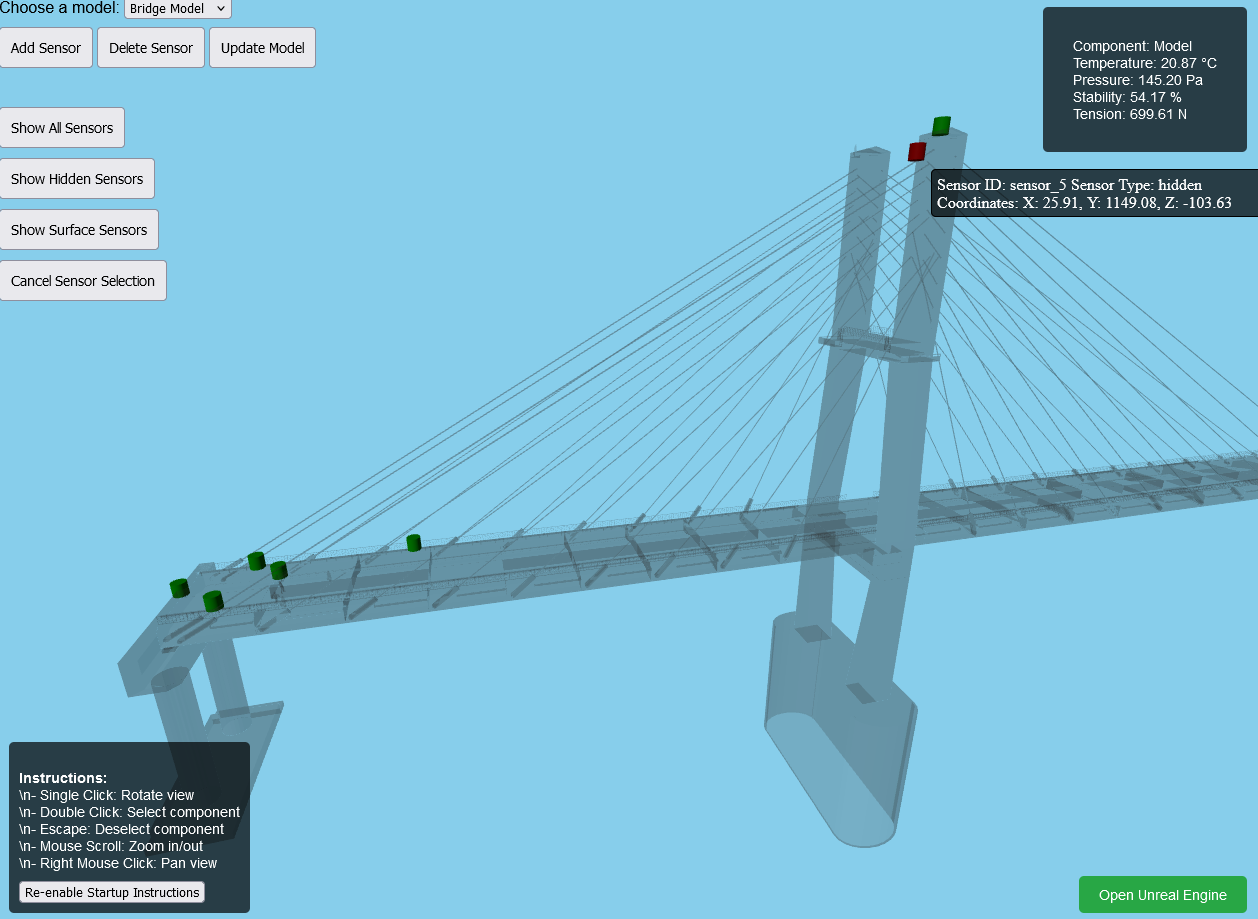
The WebGL interface lets engineers rotate the bridge, isolate sensors, inspect coordinates, and review live component readings.
Edge services support low-latency monitoring and continued operation in settings where cloud connectivity may be constrained.
FastAPI distributes common bridge and sensor data to WebGL and Unreal Engine, with coordinate transformation preserving alignment across rendering scales.
The architecture defines PureChain integration for traceable, tamper-resistant structural data and lifecycle records.
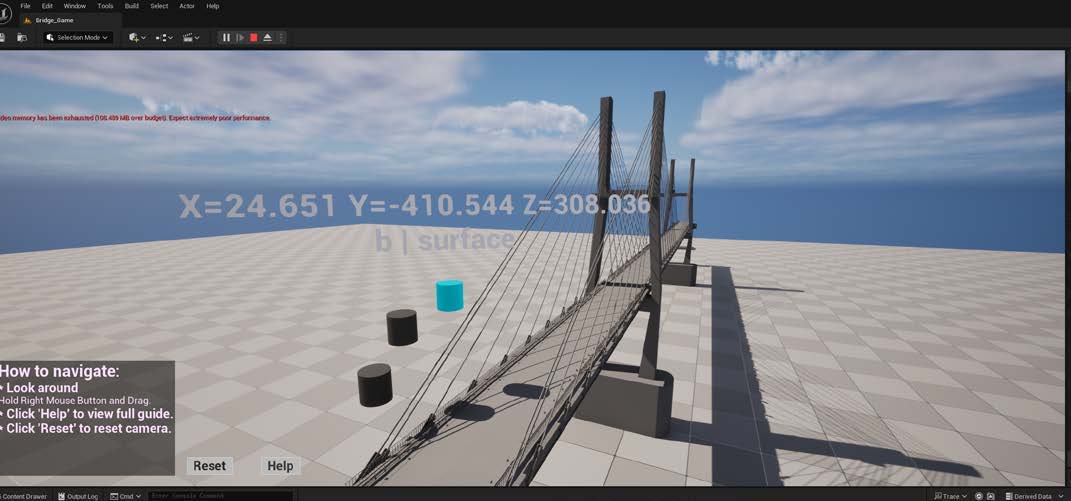
BridgeSync centers on synchronization across monitoring environments. An engineer sees the same sensor identity, location, and reading in the browser and immersive interfaces. A common FastAPI data source and coordinate transformation logic preserve that consistency.
The study validates multi-platform visualization, shared sensor identity and coordinates, and real-time interaction across three structurally different bridge twins.