Cross-battery learning
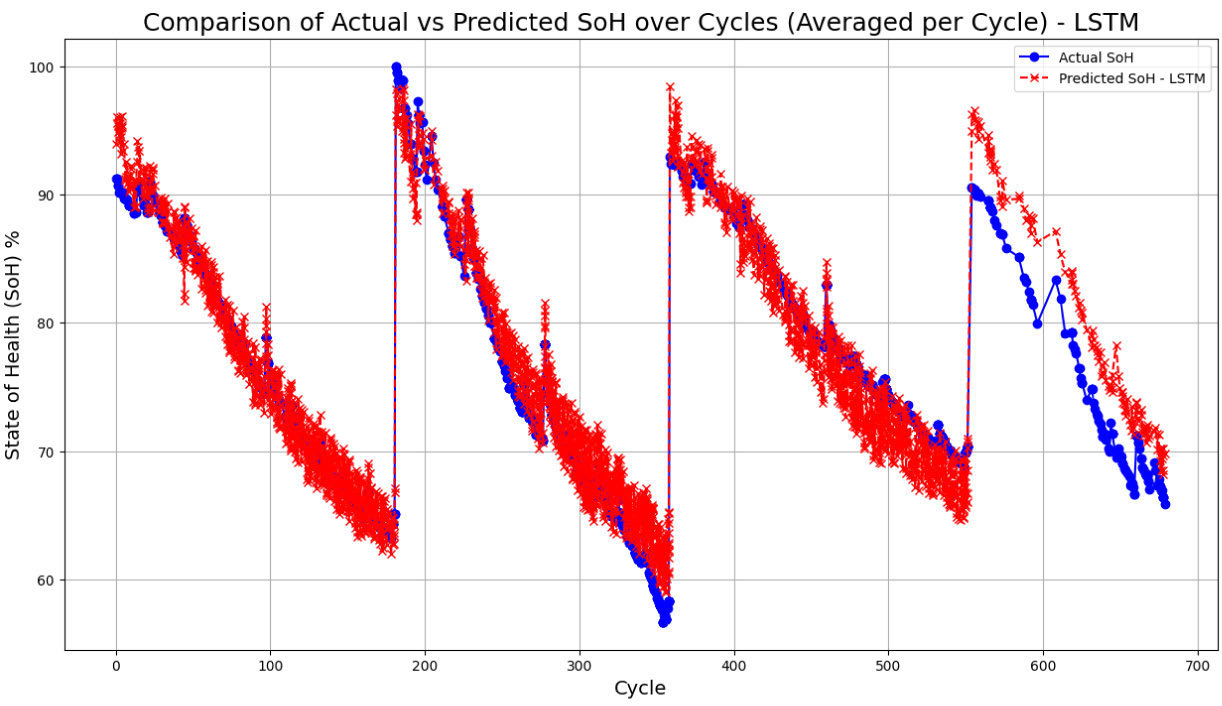
All four batteries in the NASA prognostics dataset were used to build models that learn across varied charge, discharge, impedance, temperature, voltage, and current conditions.
Trustworthy energy intelligence
A battery prediction should arrive with evidence, especially when it informs safety, maintenance, and remaining life.
Published in IEEE Access, 2024
How can deep-learning battery twins remain accurate while making their State of Charge and State of Health estimates understandable?
Battery digital twins can estimate State of Charge and State of Health, but opaque predictions limit their usefulness in safety-critical energy systems. An engineer needs to know which voltage, temperature, capacity, and degradation signals drove a result.
This work develops DNN and LSTM battery twins using the NASA battery dataset, then explains their predictions through SHAP, LIME, and linear surrogate models. It treats interpretability as part of the twin rather than an annotation added after deployment.
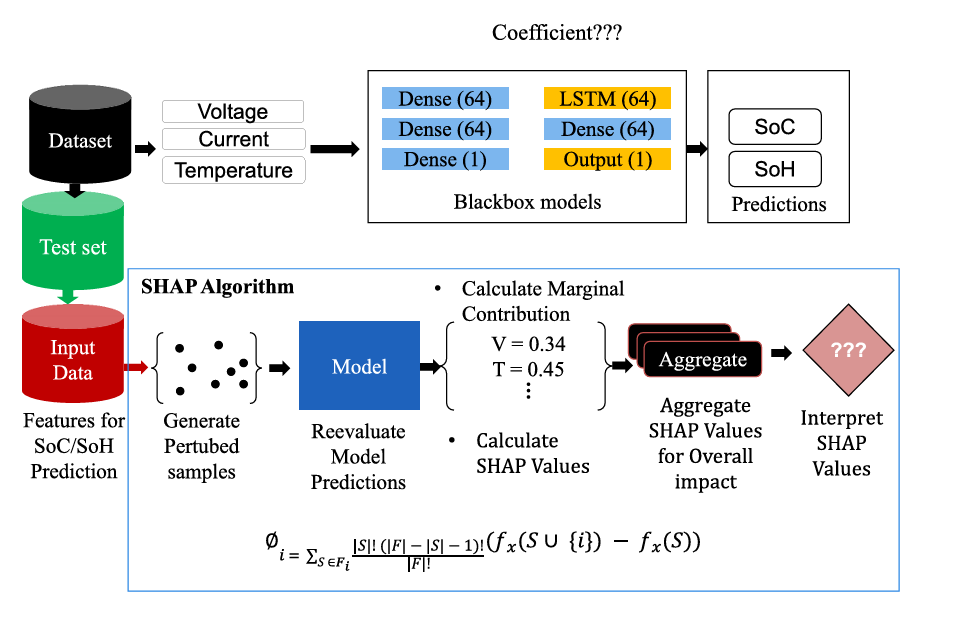
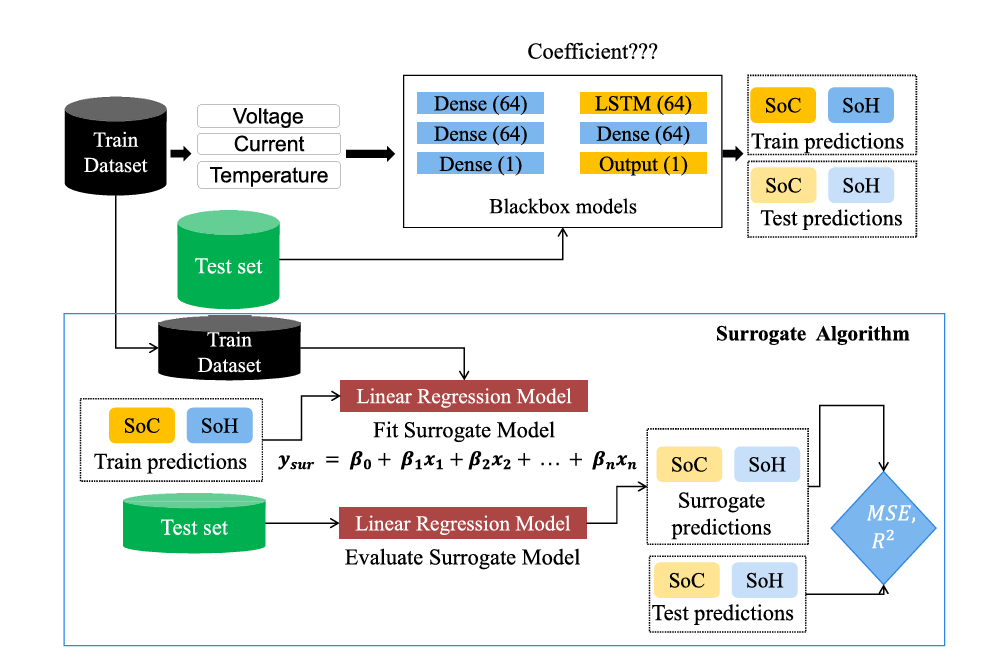
The complete framework connects battery measurements to DNN and LSTM digital twins, State of Charge and State of Health predictions, and explanation methods that expose why each estimate was produced.
All four batteries in the NASA prognostics dataset were used to build models that learn across varied charge, discharge, impedance, temperature, voltage, and current conditions.
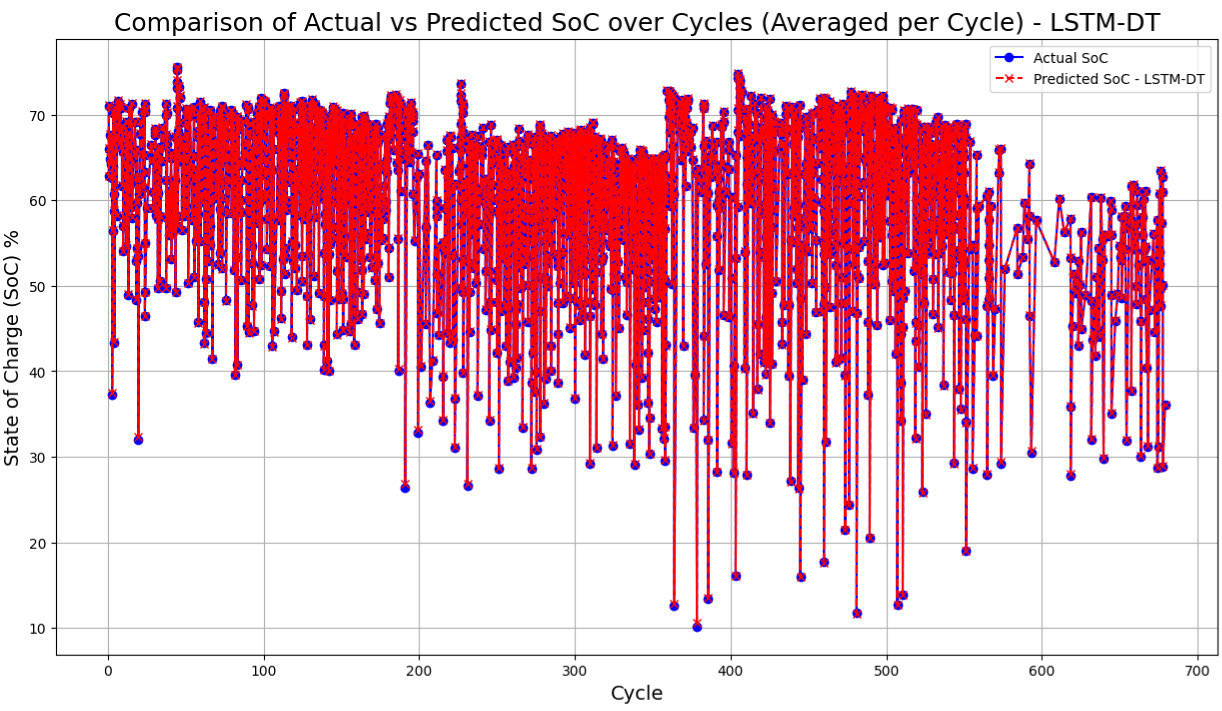
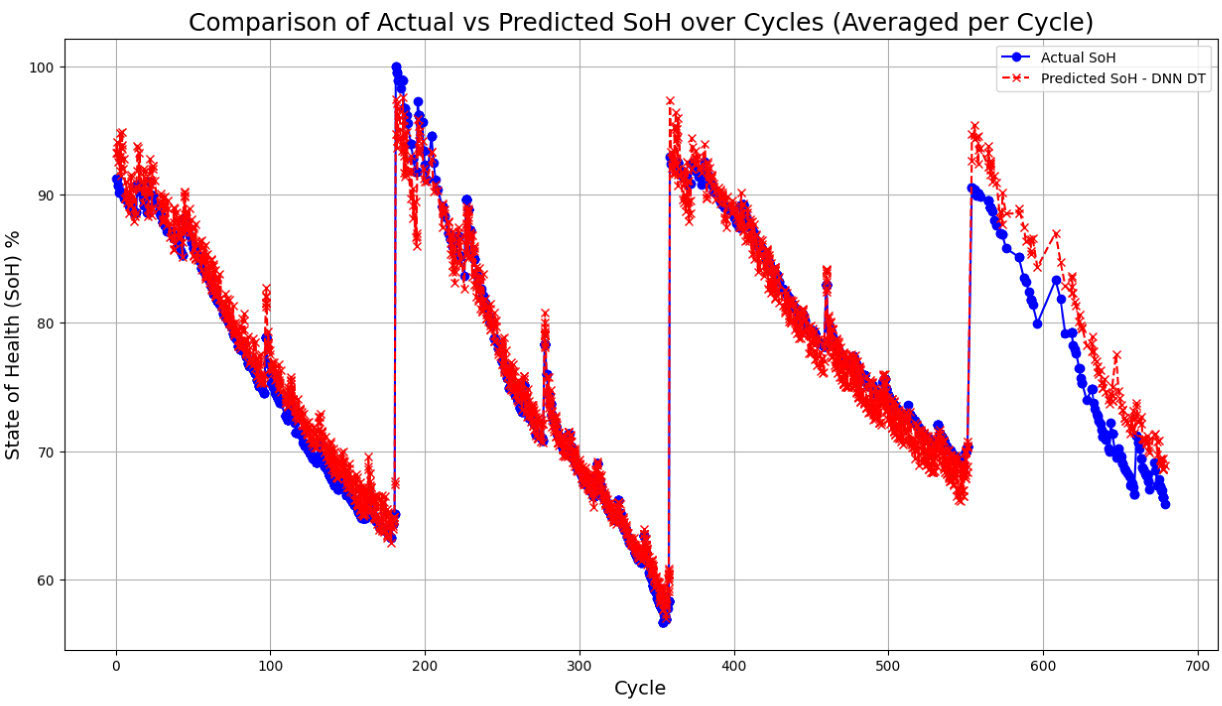
Feedforward and recurrent architectures estimate State of Charge and State of Health while capturing nonlinear and temporal battery behavior.
SHAP provides global and local attribution, LIME explains individual estimates, and linear surrogate models test whether the learned behavior can be approximated transparently.
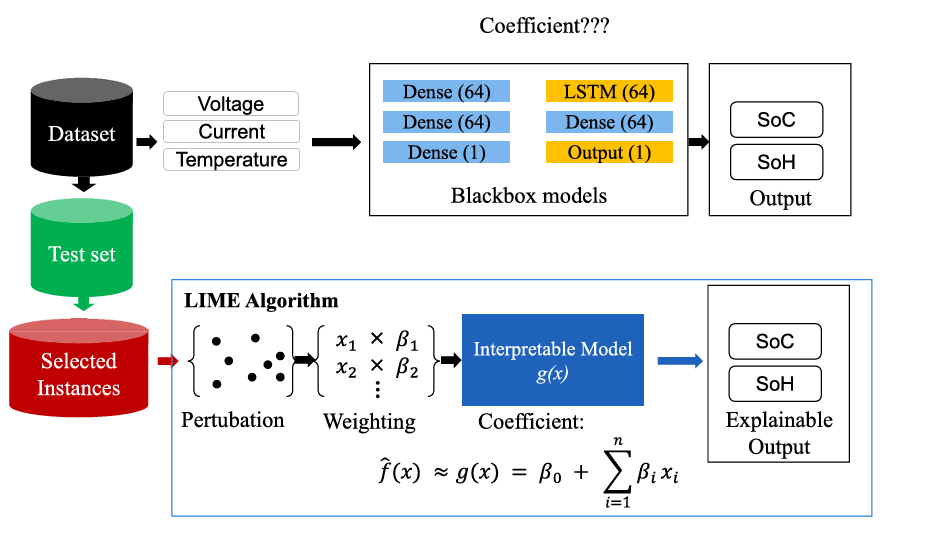
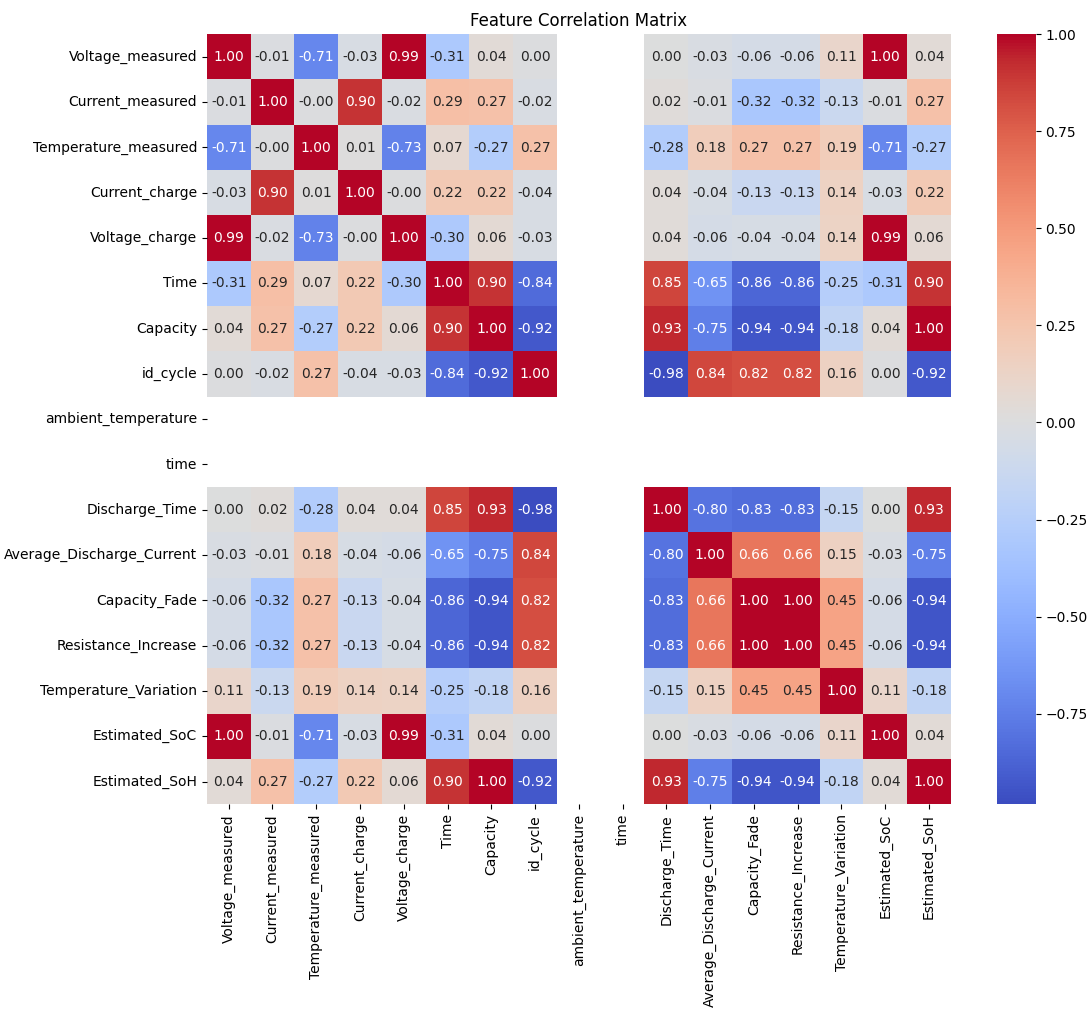
The explanations turn a state estimate into an inspectable engineering claim. For example, they reveal whether a State of Charge prediction follows measured voltage and temperature or whether a health estimate is responding to capacity and capacity fade. That traceability supports debugging, trust, and better maintenance decisions.
The study validates the framework on the NASA battery dataset. It provides the explainable prediction foundation that later became part of the broader BatteryMetrix research program.