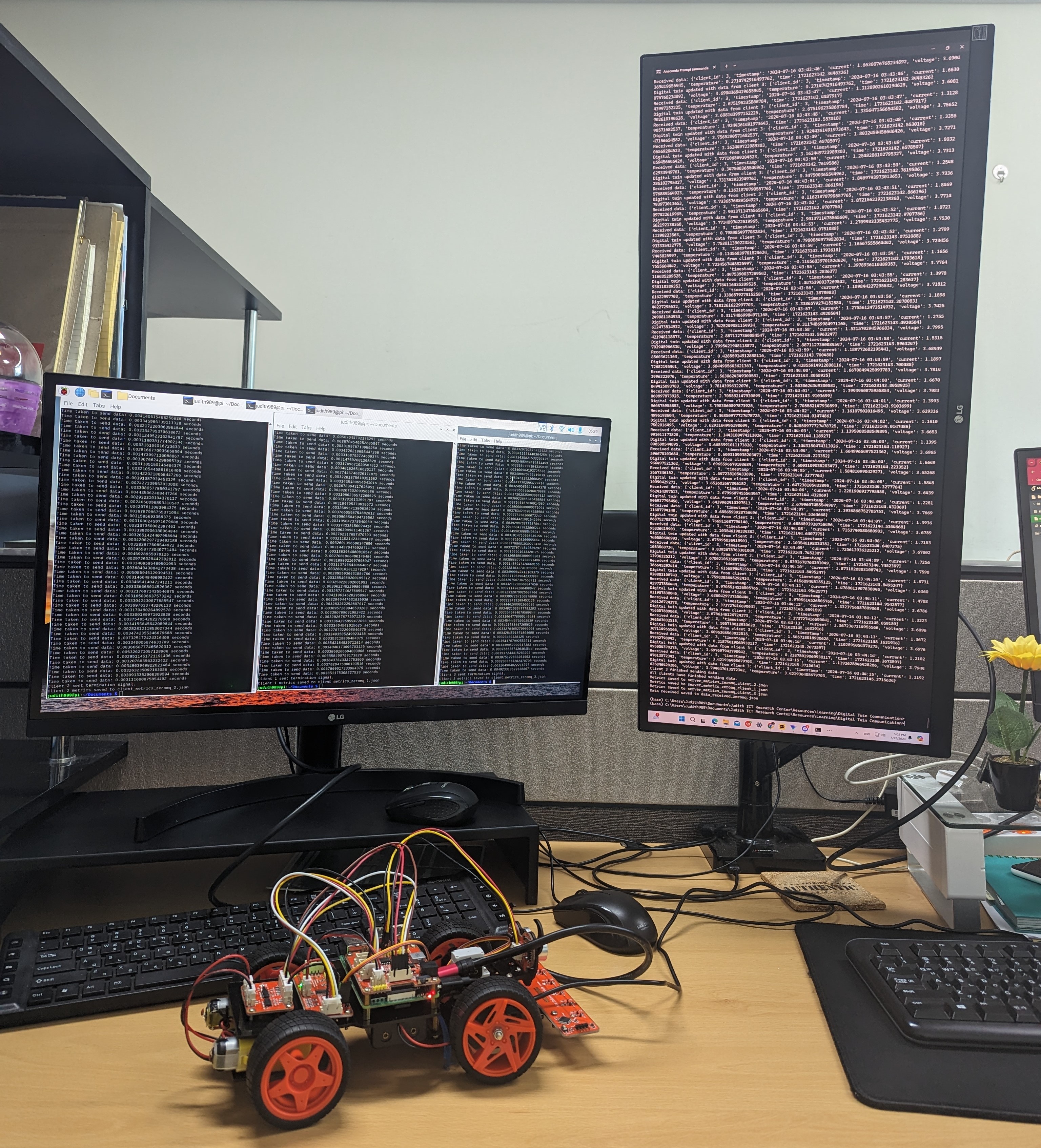
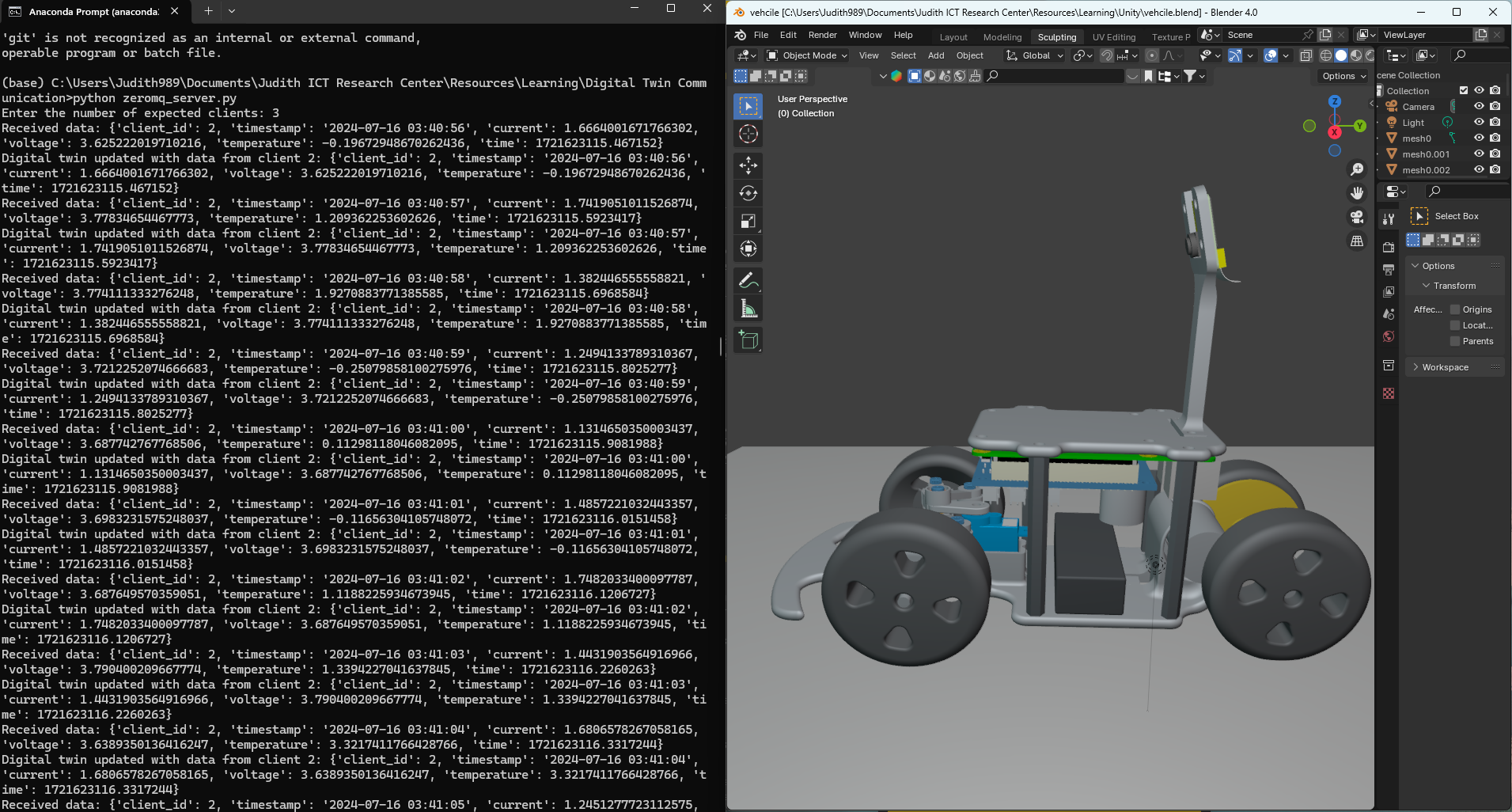
Physical-to-virtual testbed
A Raspberry Pi vehicle transmitted battery and operating data to a synchronized Unity and Blender digital-twin environment.
Connected battery systems
Which communication protocol gives an electric-vehicle digital twin the right balance of speed, reliability, and resource use?
Journal of Communications and Networks paper
How do MQTT, TCP, UDP, AMQP, ZeroMQ, HTTPS, WebSockets, CoAP, and OPC-UA perform under the practical constraints of EV digital-twin communication?
A digital twin depends on a continuous exchange between the physical asset and its virtual representation. In an electric vehicle, that exchange must remain responsive without exhausting the memory, processor, or network capacity of embedded hardware.
This project built a physical Raspberry Pi vehicle and a Unity-based digital twin, then evaluated nine communication protocols using the same battery-data exchange workflow. The study makes protocol selection an evidence-based engineering decision rather than a default software choice.
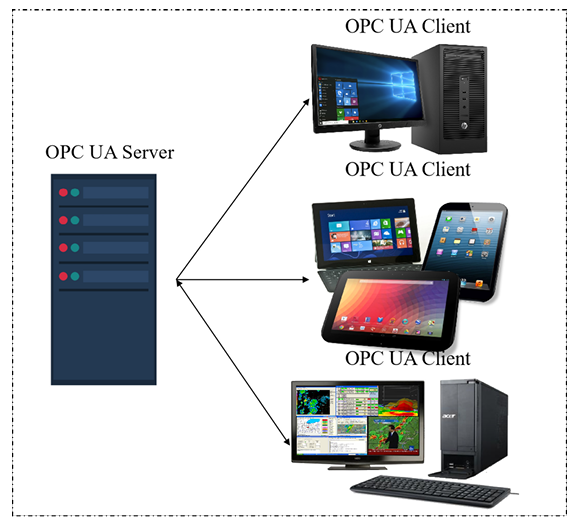
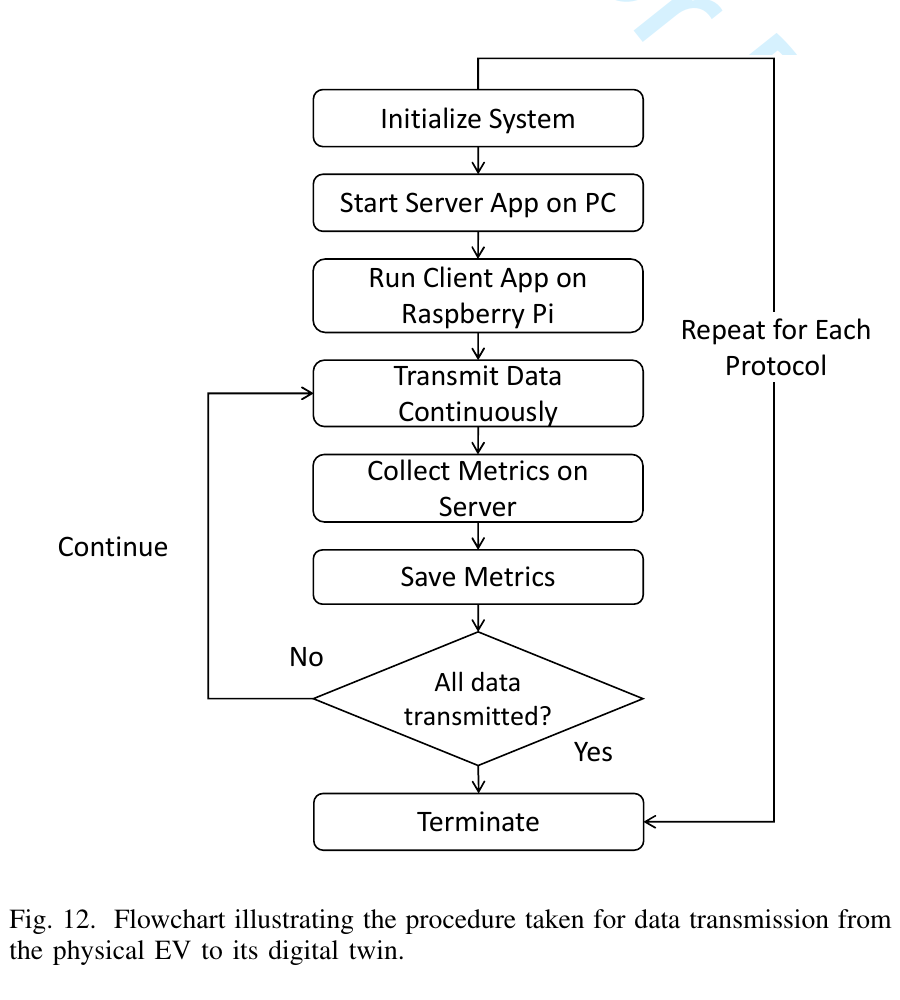
The experimental communication testbed links the physical electric vehicle, protocol clients, server terminal, and three-dimensional digital twin used for controlled protocol evaluation.
A Raspberry Pi vehicle transmitted battery and operating data to a synchronized Unity and Blender digital-twin environment.
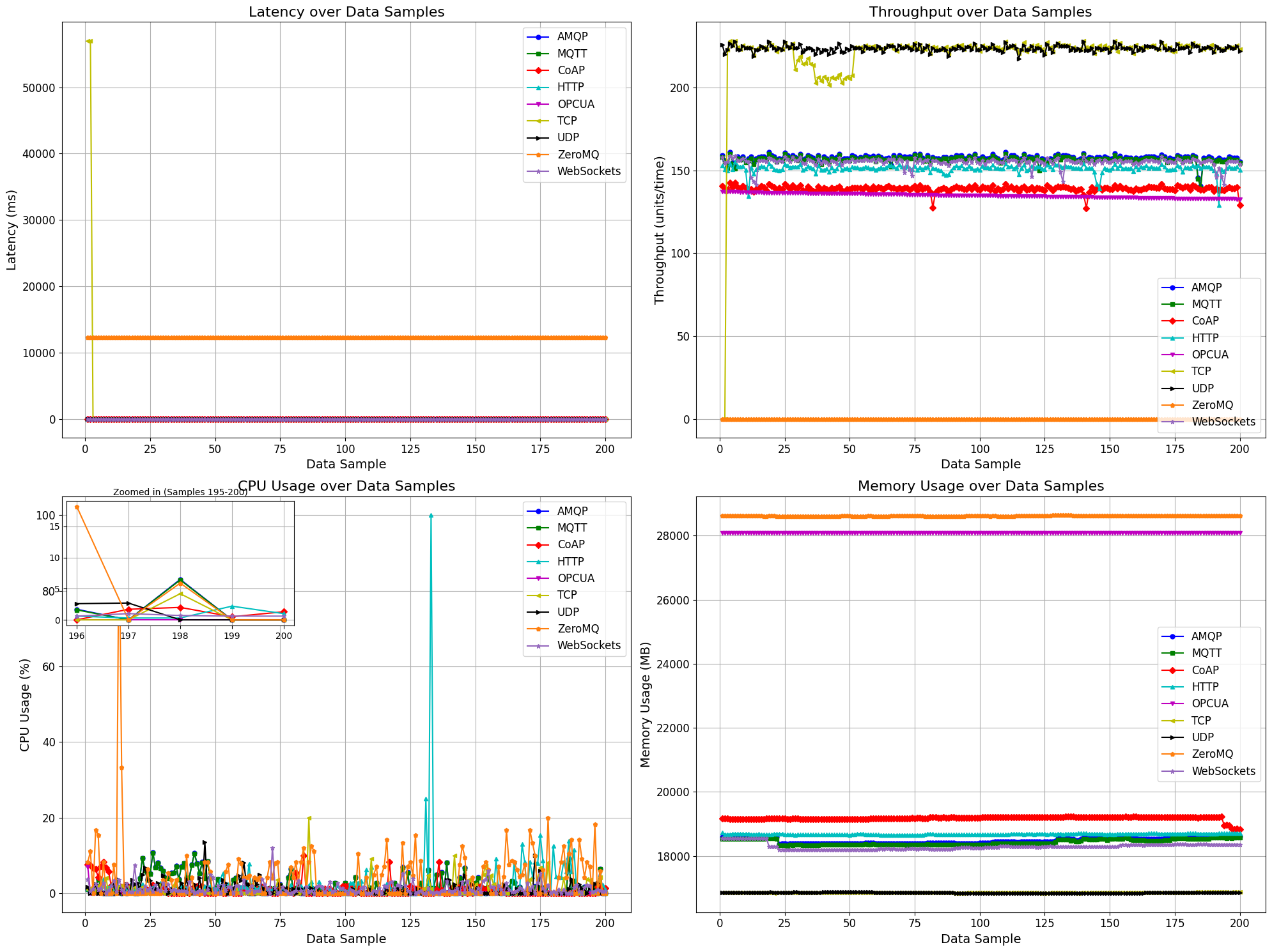
Each protocol was tested through a common client-server workflow so latency, throughput, bandwidth, packet loss, CPU use, and memory use could be compared directly.
The analysis connects measured performance to real deployment contexts, including resource-constrained devices, real-time exchange, and industrial interoperability.
No protocol dominates every requirement. MQTT is compelling when bandwidth and embedded resources are limited, UDP prioritizes latency, CoAP operates efficiently on constrained devices, and OPC-UA offers industrial structure at a higher resource cost. The right protocol follows from the twin's operating context.
The study evaluates three clients sequentially on a Raspberry Pi-based testbed. It establishes a practical baseline for future security, hardware-diversity, and concurrent fleet-scale experiments.