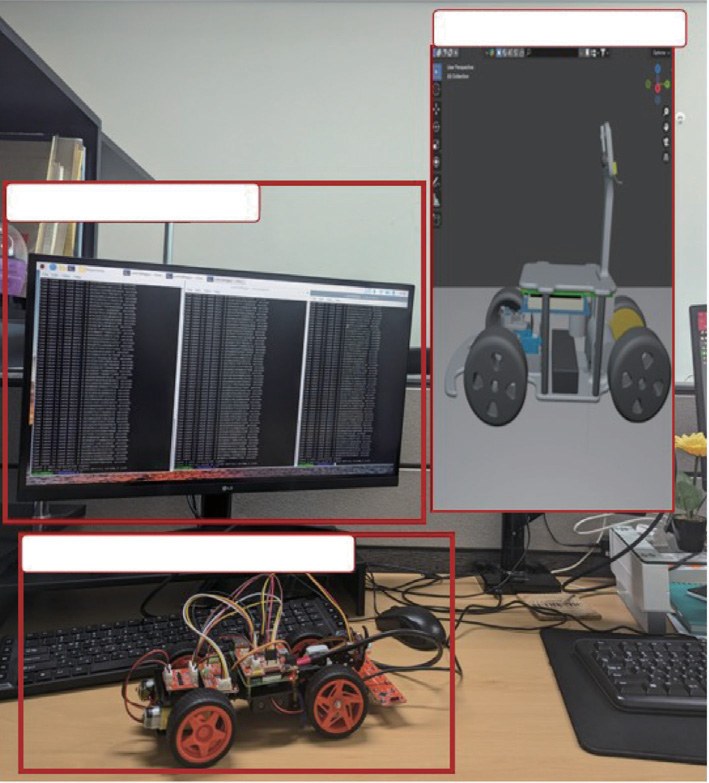
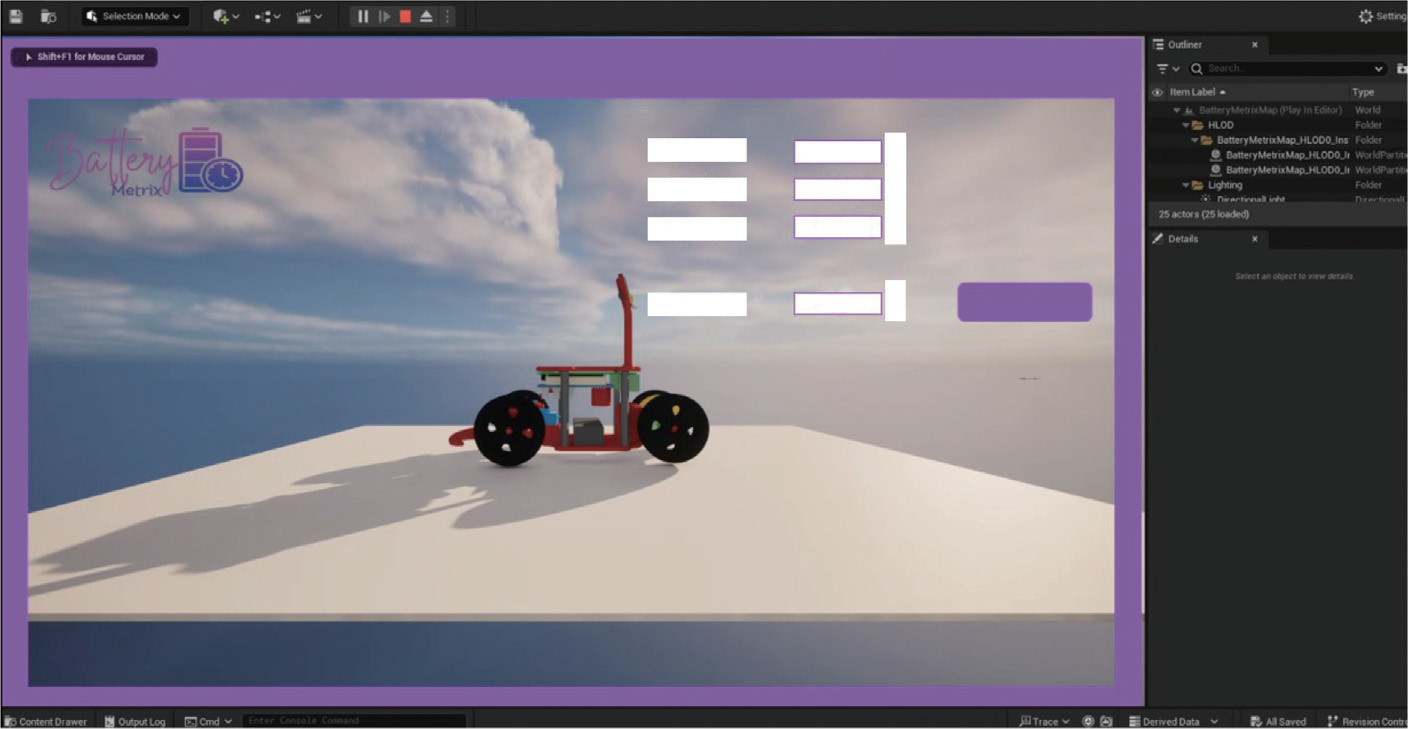
Six-layer architecture
Physical, communication, data, modeling, service, and immersive layers define a modular path from battery measurements to user interaction.
Immersive energy systems
What changes when battery monitoring becomes a synchronized environment that engineers can enter, inspect, and understand spatially?
Published in High-Confidence Computing, 2026
Can high-accuracy battery state estimation and an immersive digital twin operate together within real-time latency constraints?
Conventional battery dashboards separate models, state estimates, and visual context. This project develops a six-layer digital-twin architecture that connects the physical battery, communication, data, modeling, services, and an Unreal Engine metaverse interface.
A lithium-ion NMC battery case study combines electrochemical modeling, Unscented Kalman Filter state estimation, real-time synchronization, and immersive visualization. The architecture is designed to scale from a single experimental vehicle to cloud and fleet settings.
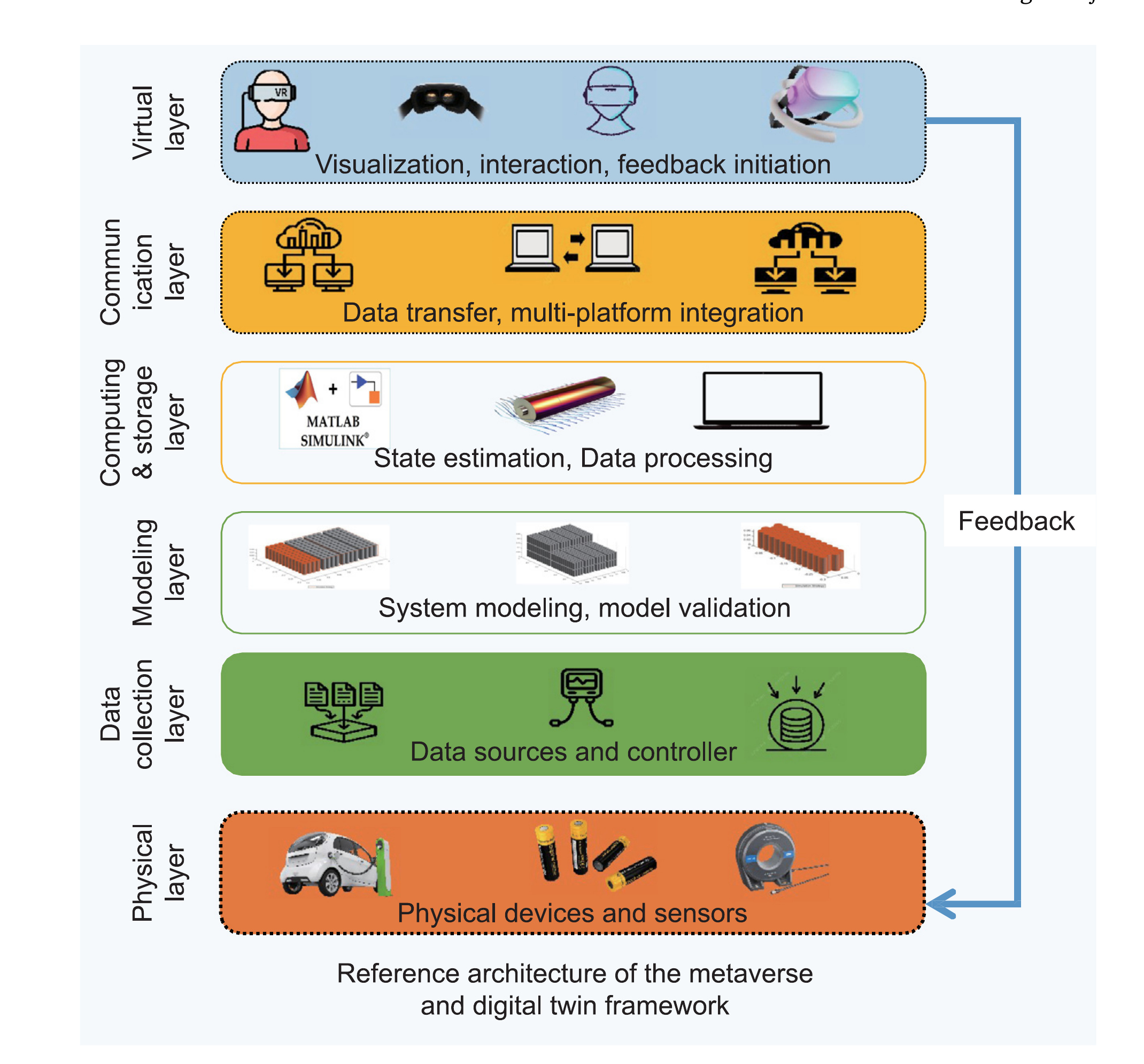
The reference architecture organizes the physical asset, communication, data, models, services, and immersive interface into a modular digital-twin stack.
Physical, communication, data, modeling, service, and immersive layers define a modular path from battery measurements to user interaction.
Electrochemical battery models and an Unscented Kalman Filter estimate State of Charge from live operating data.
The estimated state and battery measurements are synchronized with a three-dimensional vehicle environment for spatial monitoring.
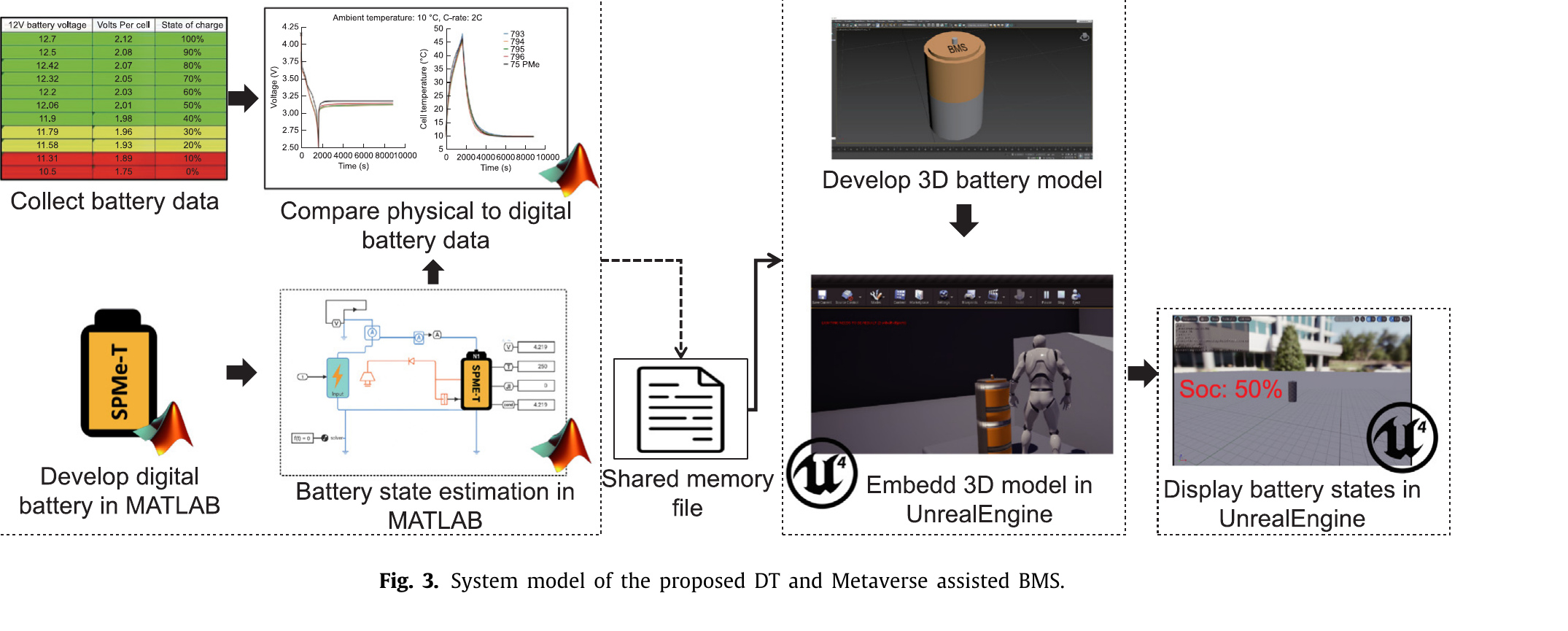
The project shows that immersive visualization does not have to come at the expense of estimation quality or responsiveness. The UKF-based twin maintains high State of Charge accuracy while the complete physical-to-virtual loop remains below 200 milliseconds.
The architecture is validated through a lithium-ion NMC battery and experimental vehicle. Commercial deployment would require security-aware communication, low-power rendering optimization, and validation on production EV testbeds.