Authorized speaker identification
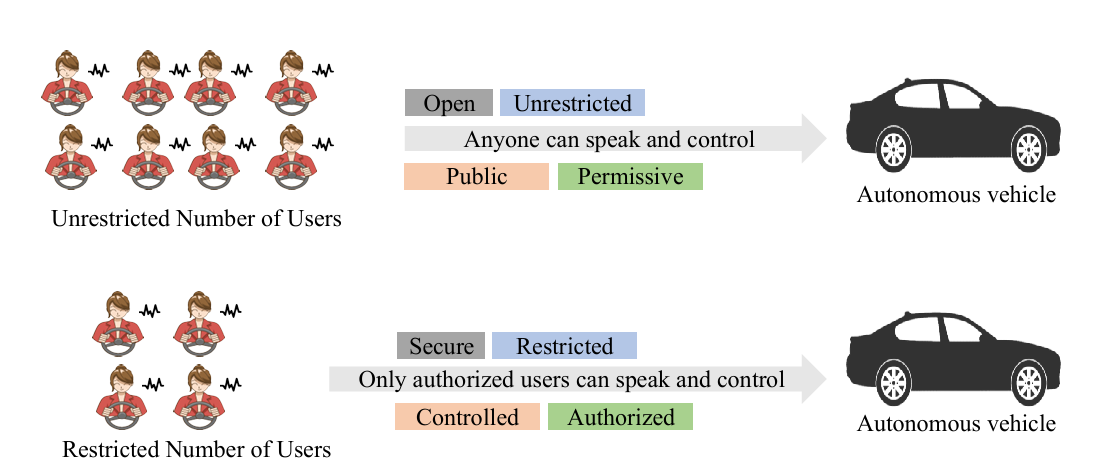
Spectral voice features and classification models restrict control to enrolled users instead of accepting commands from any speaker.
Secure autonomous systems
How can an autonomous vehicle verify who is speaking and preserve trustworthy evidence when an incident occurs?
Published in Electronics, 2023
Can voice identity, spoofing resistance, and distributed accident evidence be designed as one autonomous-vehicle trust architecture?
Voice control creates an intuitive interface for autonomous vehicles, but it also creates identity and spoofing risks. After an accident, accountability introduces a second challenge: event records must remain transparent, verifiable, and resistant to tampering.
This project connects robust speaker identification, ensemble speaker verification, blockchain-based event recording, and location-aware witness voting in one security and accountability framework.
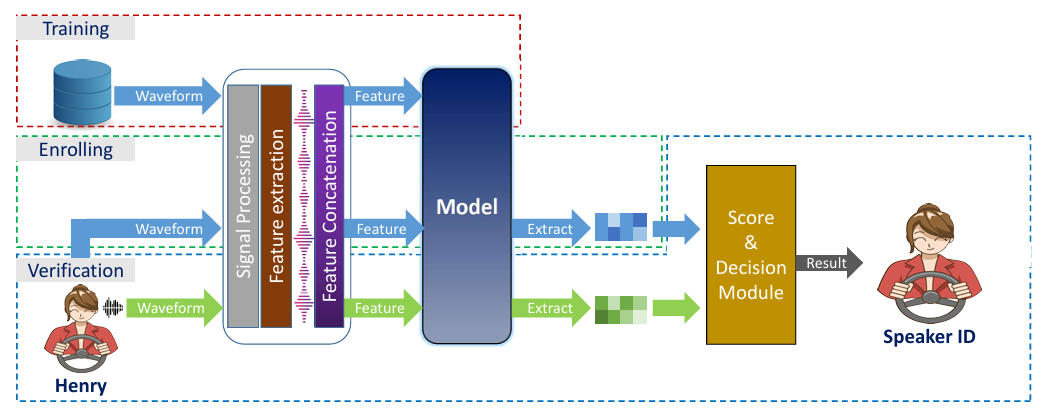
The complete system workflow links authorized-speaker verification, vehicle control, accident detection, witness voting, and blockchain-backed event recording.
Spectral voice features and classification models restrict control to enrolled users instead of accepting commands from any speaker.
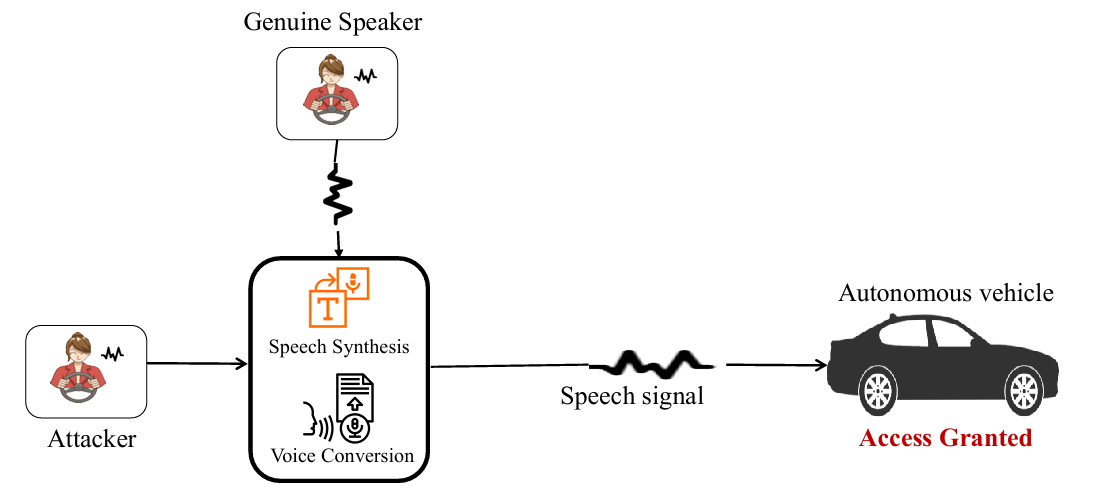
Multiple speaker-verification decisions are combined to improve resilience against synthesized or converted voice attacks.
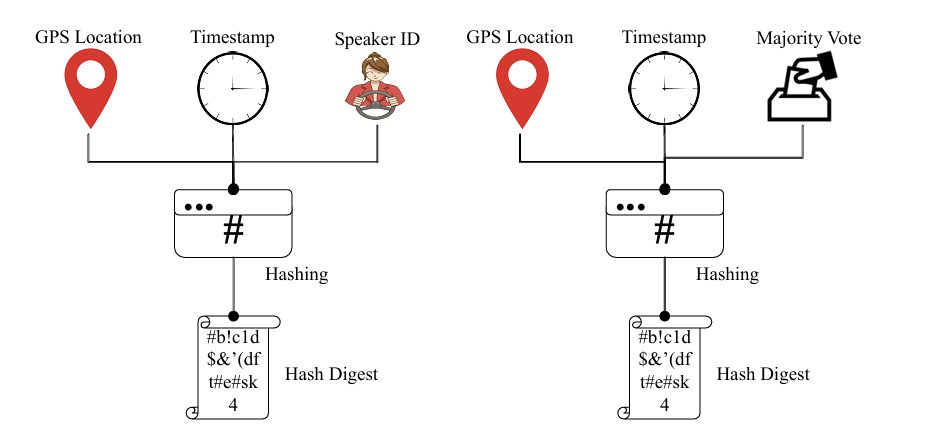
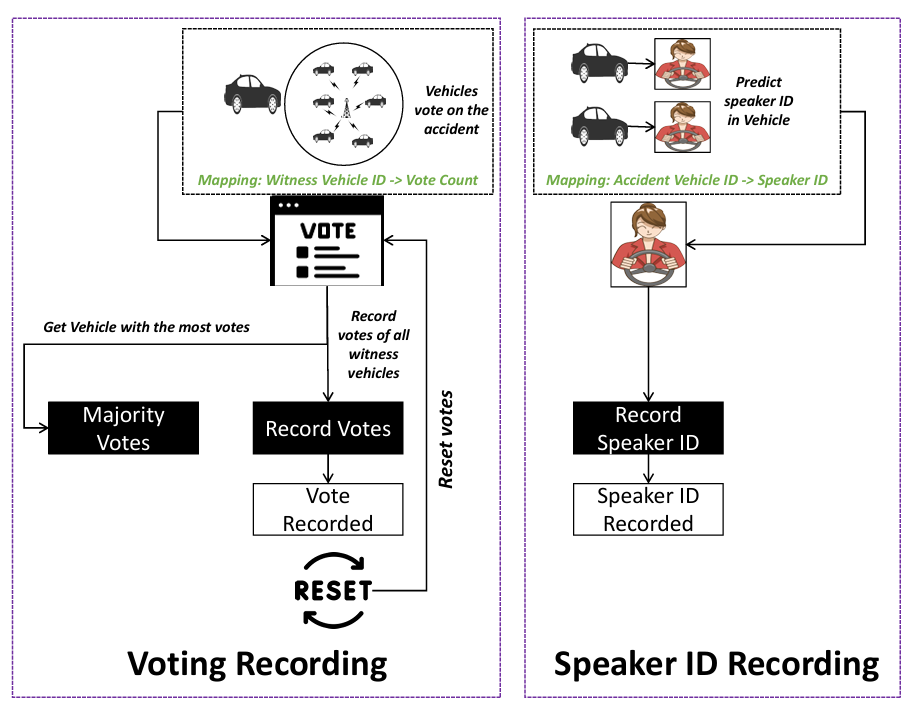
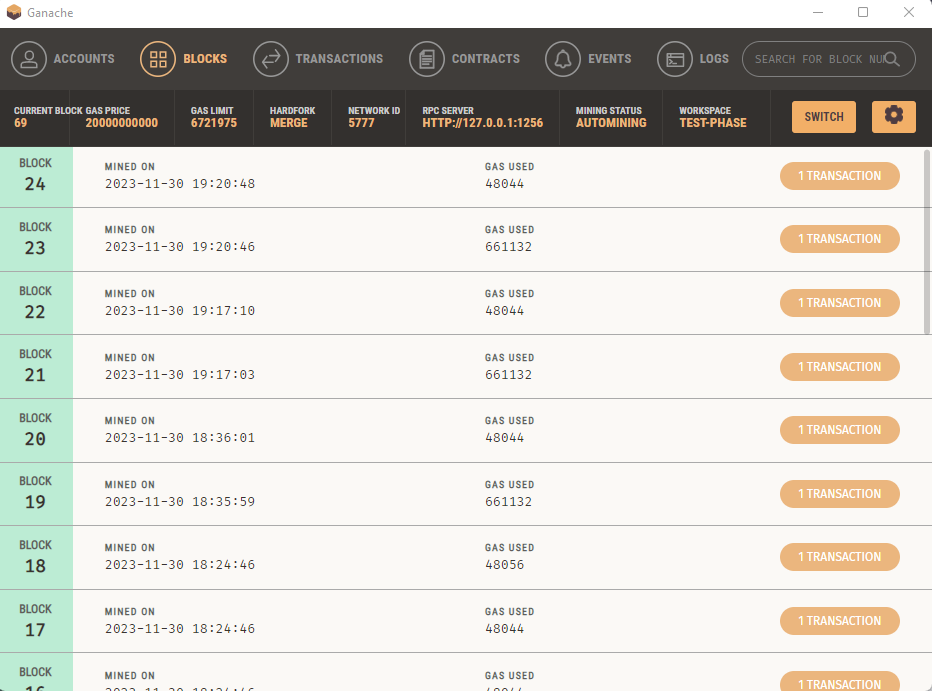
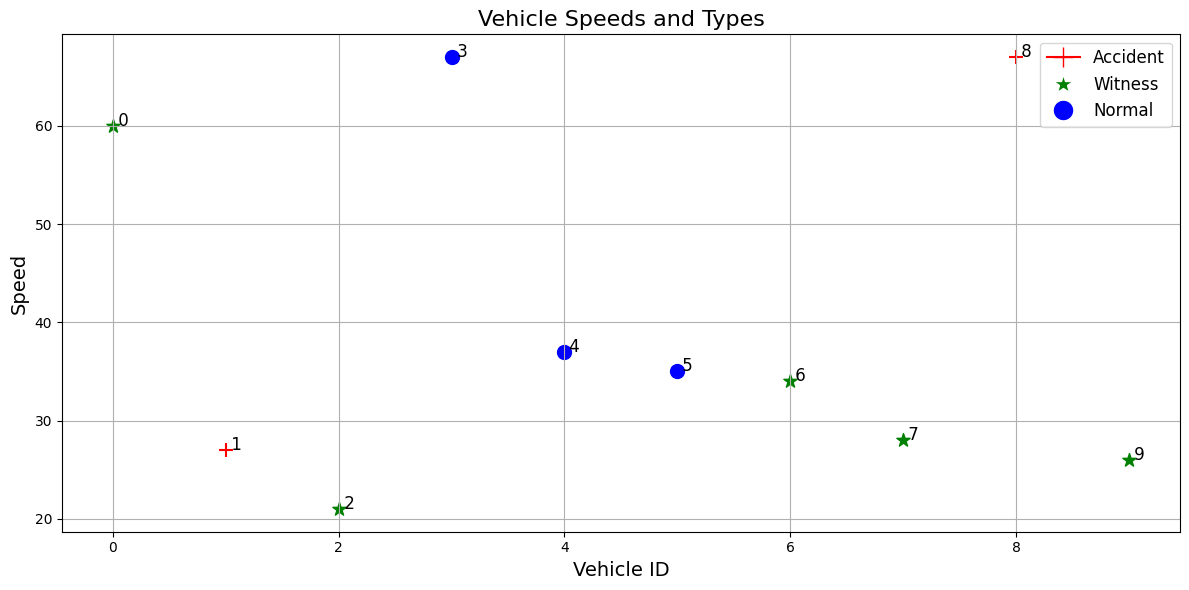
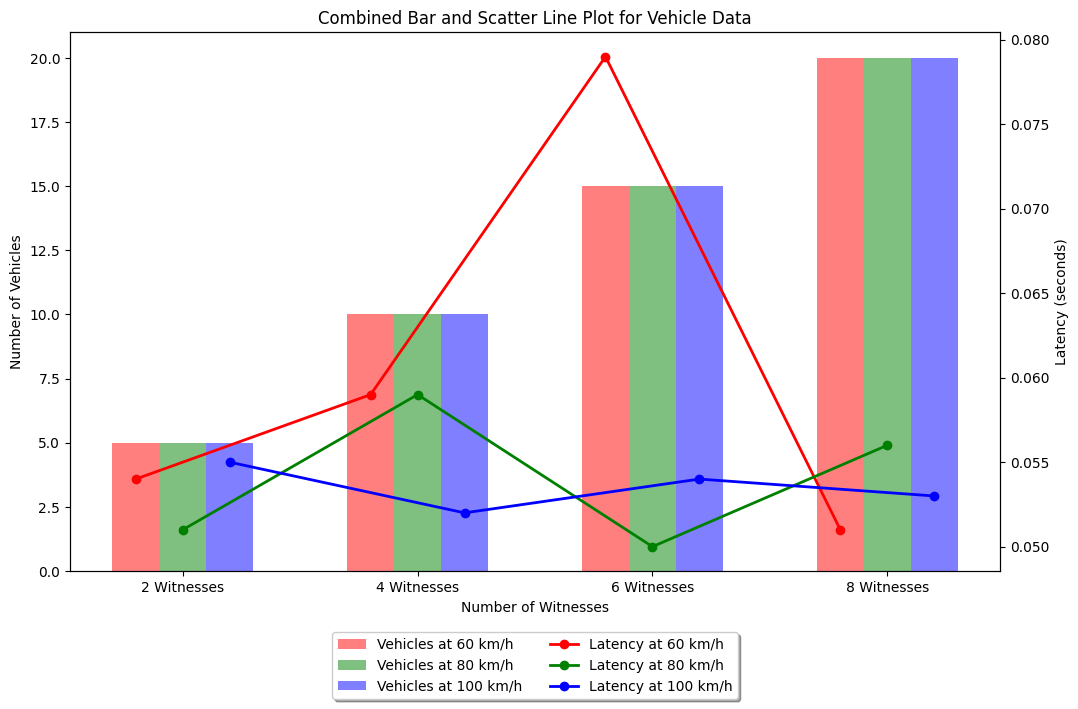
Smart contracts store vehicle, speaker, time, location, and witness-vote evidence as transparent, tamper-resistant accident records.
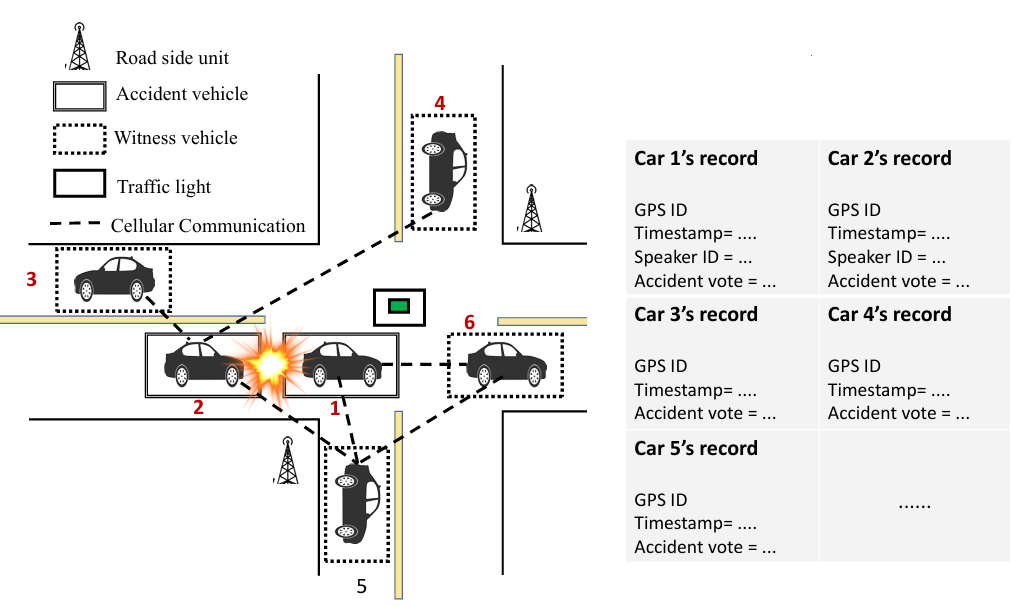
Security before an incident and accountability after it are usually treated separately. This system connects them through identity: the vehicle verifies who issued a command, preserves the associated event evidence, and incorporates observations from nearby vehicles when liability must be investigated.
The paper establishes and simulates the integrated architecture. Deployment on production vehicles would require manufacturer interoperability, dependable vehicle-to-network communication, sensor validation, and shared standards for accident evidence.